

I visited a client’s home recently to evaluate her existing EcoFlow setup. She had purchased the system believing she could add rooftop solar panels to it later. Standing in her garage looking at the hardware, I had the same conversation I had been having all week at the NABCEP conference in Milwaukee: this system is not designed for what the marketing suggests it can do, at least not legally, where code compliance is necessary.
This is not a knock on EcoFlow as a company, and it is not a hit piece from a competitor who sells different equipment. It is a code compliance issue that I can walk through point by point, starting with the photos I took at that client’s house and ending with the conclusions that the most credentialed solar professionals in the country are reaching independently.
What I Saw at the House
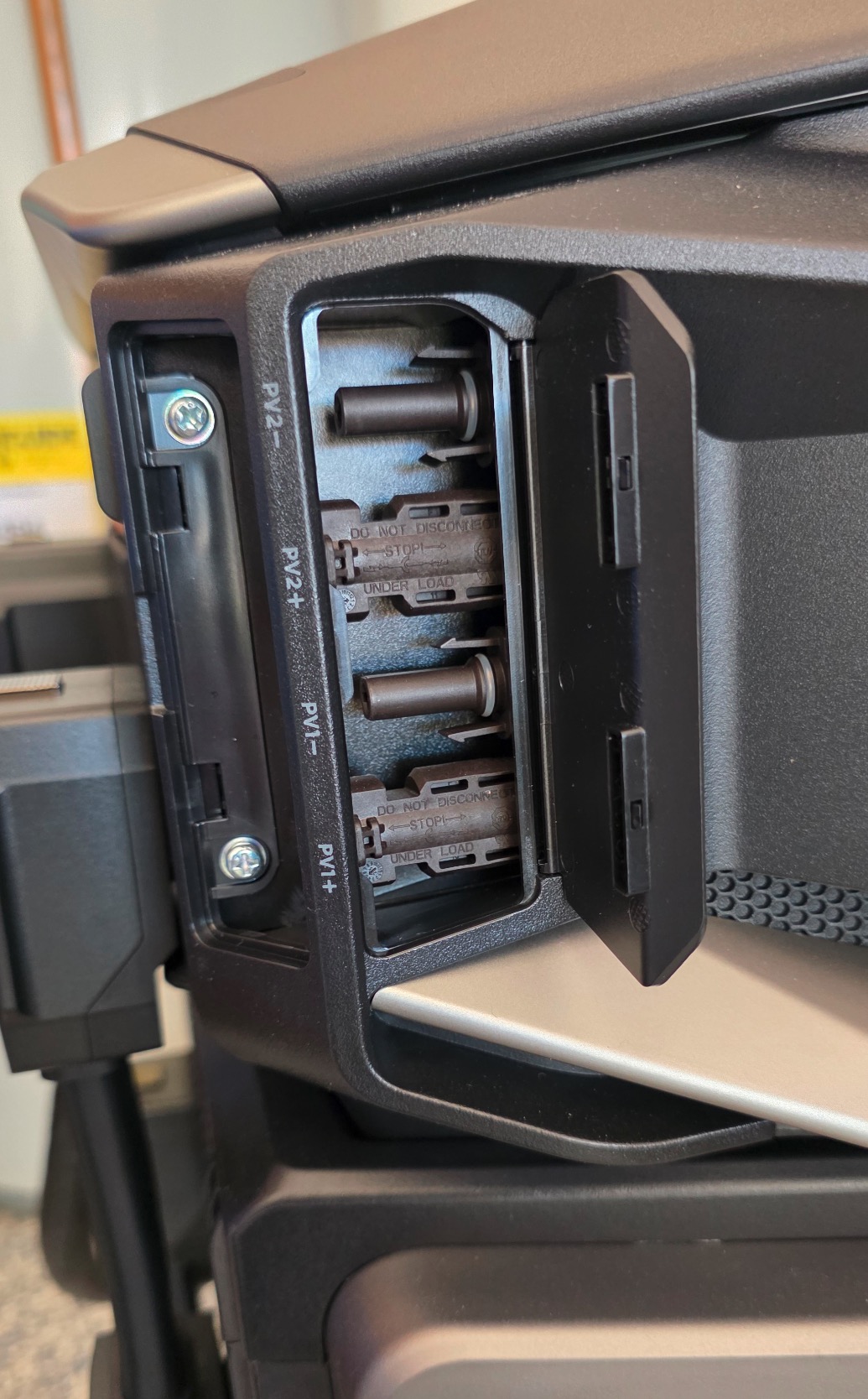
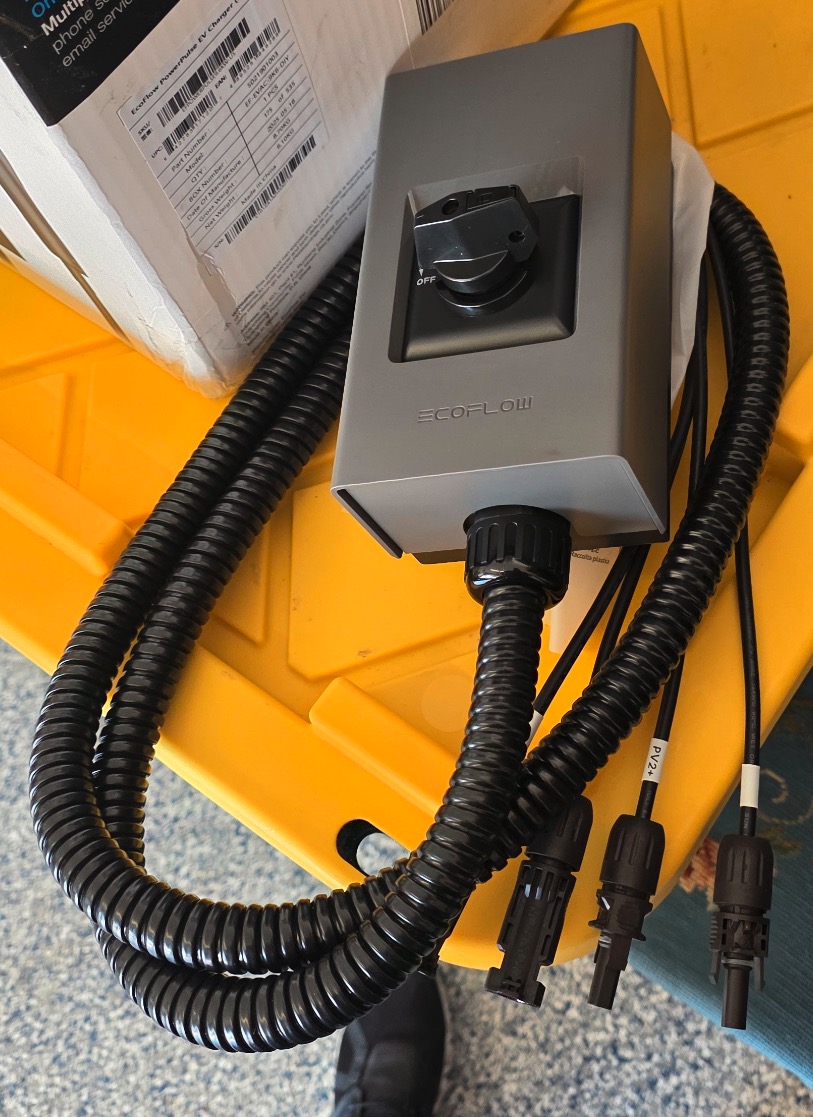
The EcoFlow Delta Pro Ultra X has two high-voltage PV input ports on its side panel. They are labeled PV1+ PV1- and PV2+ PV2-. They use MC4-compatible connectors that connect to EcoFlow’s PV Switch Box, a small wall-mounted disconnect device that ships optionally with the system. The switch box has an OFF/ON rotary handle and two sets of MC4 leads coming out of it.
That PV Switch Box is the entirety of EcoFlow’s answer to the solar integration question. Connect your panels to the switch box, run the leads to the inverter ports, done.
The problem is not the hardware quality. The connectors look well-made. The switch box is a real disconnect device. The problem is what the system is missing that the law requires, and what happens when you try to pull a permit.
The Rapid Shutdown Problem Has Not Gone Away
I have written about NEC 690.12 rapid shutdown before. The short version: any rooftop solar installation in Florida must include a system capable of de-energizing the DC conductors on and near the roof within 30 seconds of a firefighter activating the initiator at the service entrance. This protects first responders from energized conductors during an emergency.
The EcoFlow PV Switch Box does not satisfy this requirement. It is a manual rotary disconnect, not a listed rapid shutdown system. It has no communication capability, no initiator at the service entrance, no module-level power electronics, and no UL 3741 PV Hazard Control System listing. There is no way to wire it into a code-compliant rapid shutdown architecture without bypassing EcoFlow’s proprietary connector system entirely and introducing equipment combinations that have never been tested together.
EcoFlow’s own documentation acknowledges this gap. The Delta Pro Ultra manual states that if you connect the system to PV circuits installed on or in buildings, the system shall include a rapid shutdown function per NEC regulation. It then says installation must be done by a qualified electrician. What it does not say is how to achieve that compliance, because EcoFlow has not provided a listed rapid shutdown solution for this system.
That is not a technicality. That is the manufacturer telling you in writing that the system as designed does not include rapid shutdown, and that someone else needs to figure it out.
Could you install a separate rapid shutdown system that technically works? Yeah, you could outfit the system with Tigo or AP Smart Rapid Shutdown devices and a Sunspec transmitter. Cobbling this together could work, but it’s clunky, at an expense that buyers are not likely expecting.
The NABCEP Conference Conversation
I was at NABCEP CE Milwaukee this month. Rapid shutdown came up repeatedly, not always in the official sessions, but in the hallways, at dinner, and in the conversations between credentialed professionals who install permitted systems every day.
The consensus among experienced installers was blunt: the portable power station ecosystem, including EcoFlow’s higher-end products marketed for rooftop solar integration, creates a permitting problem that has no clean solution. Several installers had already turned away jobs where homeowners showed up with an EcoFlow expecting to add rooftop panels. The answer was the same across the board: there is no NEC-compliant path to integrate rooftop solar with this equipment as the PV source inverter.
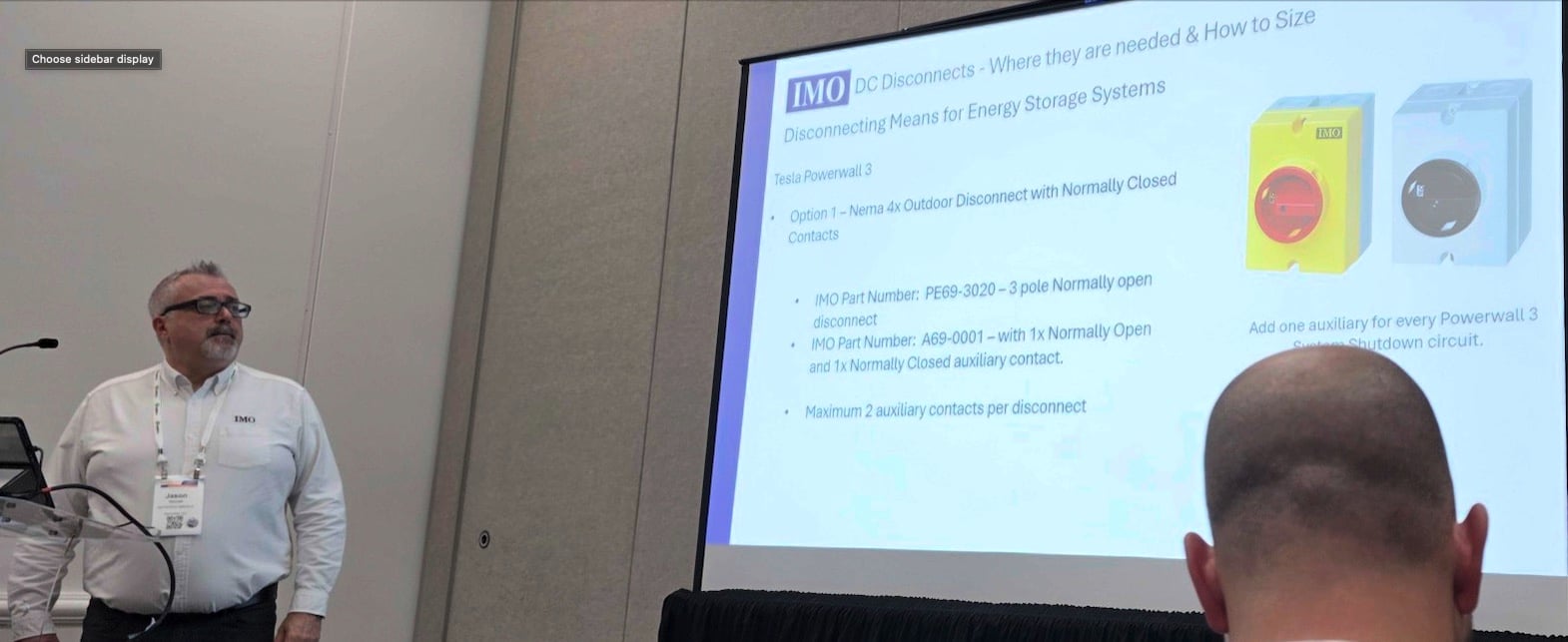
This is not a fringe opinion. These are NABCEP-certified professionals who have been through the code, talked to AHJs, and know what a permit application requires. When the most credentialed people in the industry independently arrive at the same conclusion, that is worth paying attention to.
The ESS Emergency Shutdown Gap
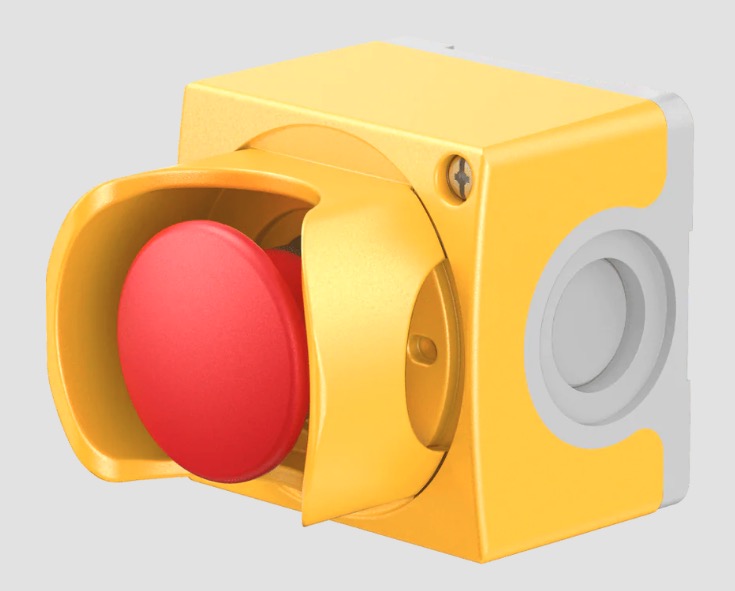
Rapid shutdown is the most visible issue, but it is not the only one. NEC Article 706 requires that energy storage systems installed in one- and two-family dwellings include an emergency shutdown function. Specifically, an initiation device must be located at a readily accessible location outside the building and must clearly indicate whether it is in the off or on position. Activating it must stop the ESS from exporting power to the premises wiring.
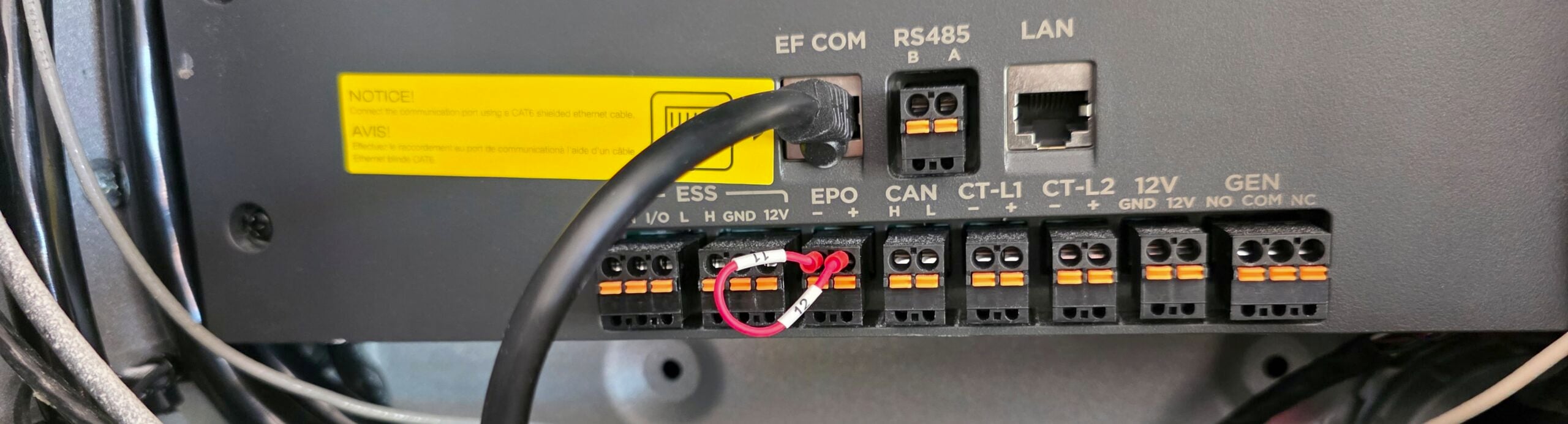
The EcoFlow PV Switch Box is not that device. EcoFlow does offer an “Emergency Power Off” button that can satisfy this requirement, but only if installed and installed correctly. At this visit, the factory bypass jumper was clearly still installed in the EPO port of the Smart Panel, so the installer conveniently ignored this requirement.
This is a separate requirement from rapid shutdown. It applies to the battery system itself, not the PV array. A properly installed system like a Powerwall 3 or EG4 FlexBoss addresses this through listed system components designed specifically to meet 706.15(B). EcoFlow’s documentation does not address it well, but there is a workaround that can be made to work. I wouldn’t say this is a deal breaker, but it is something to mention, and there is a cost associated with this.
Florida’s Fire Code Does Not Care If the Battery Has Wheels
Here is something EcoFlow’s marketing materials will not explain: NFPA 855, the fire safety standard for energy storage systems that Florida has adopted through the Florida Building Code, does not exempt portable products from its requirements just because they are portable.
NFPA 855’s scope language is explicit: the standard applies to stationary energy storage systems, including mobile and portable ESS installed in a stationary situation. Once you connect an EcoFlow unit to your home’s electrical panel through a transfer switch or smart home panel and leave it there as your backup power system, it is installed in a stationary situation by any reasonable reading of that language. The wheels on the unit do not change that analysis. The fact that you could theoretically unplug it and take it camping does not change that analysis either.
What NFPA 855 then requires for a residential one- and two-family dwelling installation is meaningful. Chapter 15 of NFPA 855 limits individual units to 20 kWh in one- and two-family dwellings, with aggregate limits of 40 kWh in utility closets or storage areas and 80 kWh in garages or exterior locations, and requires 3-foot separation between units unless a UL 9540A test report supports a reduced spacing. These limits are relaxed in future code cycles, but those standards will not be adopted by Florida for several years.
That 3-foot separation requirement is the detail most portable power station installations completely ignore. A homeowner who has stacked three EcoFlow units next to each other against a garage wall, which is exactly how EcoFlow markets the stacked configuration, has almost certainly violated the spacing requirement. Without a UL 9540A thermal propagation test report specific to that stacked configuration and that installation environment, there is no code basis for placing those units in contact with each other or within 3 feet of each other.
The fire codes also require ESS to be listed to UL 9540, and for existing ESS that were not listed to UL 9540, NFPA 855 provides a measure of retroactivity, requiring the operator to provide a Hazard Mitigation Analysis and empowering the AHJ to require safety measures. So even systems already installed without proper listing face potential enforcement exposure.
The code cycle is moving in one direction on this. The 2026 NEC now requires that all sources capable of energizing a premises — including PV systems, generators, batteries, and microgrids — be identified at the service disconnect location. The era of a battery system sitting in a garage, connected to home circuits, without appearing anywhere in the permit record or on the service equipment labeling is closing. The 2026 NEC also explicitly adds new coverage for electric storage vehicles and similar equipment connected to dwellings, a direct response by the code-making panels to the proliferation of large portable battery systems being used as home backup. The trend in every code cycle is toward capturing these products under the same requirements that apply to purpose-built stationary ESS, because from a fire safety standpoint, a 20 kWh lithium battery is a 20 kWh lithium battery regardless of what brand name is on the side or whether it shipped with a handle.
The bottom line on NFPA 855: the portability argument is not a compliance defense. If it is connected to your home and provides backup power, the fire code sees it as a stationary installation. Act accordingly.
This Problem Is Not Unique to EcoFlow
Everything in this post applies to the broader portable power station market, and for most of those brands the situation is actually worse, because at least EcoFlow pursued a UL 9540 listing for the Delta Pro Ultra and Delta Pro 3. Almost nobody else in this space has.
The brands selling portable power stations with smart transfer switches, smart panels, and home backup marketing include Jackery, Bluetti, Anker SOLIX, Goal Zero, DJI Power, Growatt, Vtoman, BougeRV, Oupes, Lion Energy, ABOK, and a growing list of white-label manufacturers pushing similar products through Amazon. Every single one of them is marketing some version of home backup capability. Not one of them, outside of EcoFlow’s two specific models, carries a UL 9540 system-level listing to my knowledge.
Jackery is probably the most aggressively marketed for home backup use. Their Explorer series paired with the Jackery Smart Transfer Switch is pitched as a whole-home backup solution. As documented in research I have covered in a prior post, Jackery’s main power station units carry UL 2743 — the portable power pack standard, and the battery packs carry UL 1973 at the component level. Their transfer switch carries UL 916 and UL 67. That combination does not add up to a UL 9540 system listing. Jackery confirmed this directly when users requested their certification documentation (confirmed via various online forums).
Bluetti has built significant brand equity on LiFePO4 battery quality and long cycle life. Their Apex 300, AC500, and other large-format home backup units are capable pieces of hardware. None carry a UL 9540 system listing. The AC wiring method problems, rapid shutdown gaps, emergency shutdown deficiencies, and NFPA 855 stationary installation requirements apply to every one of their home backup configurations when installed in a permanent manner.
Anker SOLIX markets the F3800 Plus as a home backup solution. DJI Power markets the Power 2000 with UPS capability for home use. Goal Zero has sold residential backup systems for years. Growatt, a major manufacturer whose equipment appears under multiple brand names, markets similar products. None have UL 9540 system listings to my knowledge.
The smart panel and smart transfer switch accessories that these brands sell to connect their units to home circuits deserve their own paragraph. These devices are listed: UL 916, UL 67, and similar standards, and those listings are real. But a listed transfer switch paired with an unlisted battery system does not produce a listed installation. The transfer switch listing covers the transfer switch. It says nothing about the battery system upstream of it. The code requires the complete ESS to be listed, not just the switching device that connects it to your panel.
The portable power station industry built an entire home backup product category on top of equipment that was certified for camping. The certifications are real. They just certify the wrong use case. And unlike EcoFlow, which at least acknowledged the rapid shutdown requirement in their documentation, most of these brands do not mention NEC 690.12, NFPA 855, or Article 706 anywhere in their user manuals, their installation guides, or their marketing materials.
That is not a technicality. That is a market-wide compliance gap that every homeowner, every contractor, and every AHJ in a NEC-enforced jurisdiction needs to understand.
The DC Arc Fault Question
NEC 690.11 requires arc fault circuit protection for PV systems with DC source or output circuits operating at 80 volts or more. The Delta Pro Ultra X PV inputs accept high-voltage strings up to 500 volts DC. That is well above the threshold.
EcoFlow has published no documentation indicating that the PV Switch Box or the inverter’s MPPT inputs include listed DC arc fault protection. The connector housings on the port panel actually carry a warning molded directly into the plastic: DO NOT DISCONNECT — STOP — UNDER LOAD. That warning is about preventing arc flash at the connector when current is flowing. It is an acknowledgment that arcing is a real hazard at these voltage levels. It is not arc fault circuit protection.
A properly listed solar inverter or charge controller used in a permitted installation carries UL 1699B arc fault listing. The EcoFlow hardware has no such listing on the PV input side. That alone precludes it from connecting rooftop solar panels in a legally compliant manner.
The Wiring Problem Nobody Is Talking About
Everything discussed so far assumes you could somehow satisfy the rapid shutdown, arc fault, and emergency shutdown requirements. You cannot, but set that aside for a moment and consider a more fundamental problem: there is no legal way to route the DC wiring from a rooftop solar array to the EcoFlow Delta Pro Ultra X inside a house.
NEC 690.31 requires that PV source and output circuit conductors inside a building be installed in a raceway. Specifically, for systems operating above 30 volts, those conductors must be enclosed in metallic conduit: rigid metal conduit, intermediate metal conduit, or metal conduit systems when run inside the building envelope. The Delta Pro Ultra X PV inputs accept strings up to 500 volts DC. Five hundred volts of DC inside your walls or dangling in the open is not something the code allows to run loose in flexible cable or through open framing.
Now look at what EcoFlow provides to solve this problem. The PV Switch Box ships with MC4 connector leads hanging out of it. That is the entire solar connection system. There is no conduit fitting. There is no knockout. There is no provision for attaching any raceway to the enclosure whatsoever. The box is a plastic housing with a rotary switch and a pair of cable whips. You cannot legally terminate metallic conduit to it. It was not designed for that. It was designed for a portable unit sitting on a patio with solar panels propped up next to it.
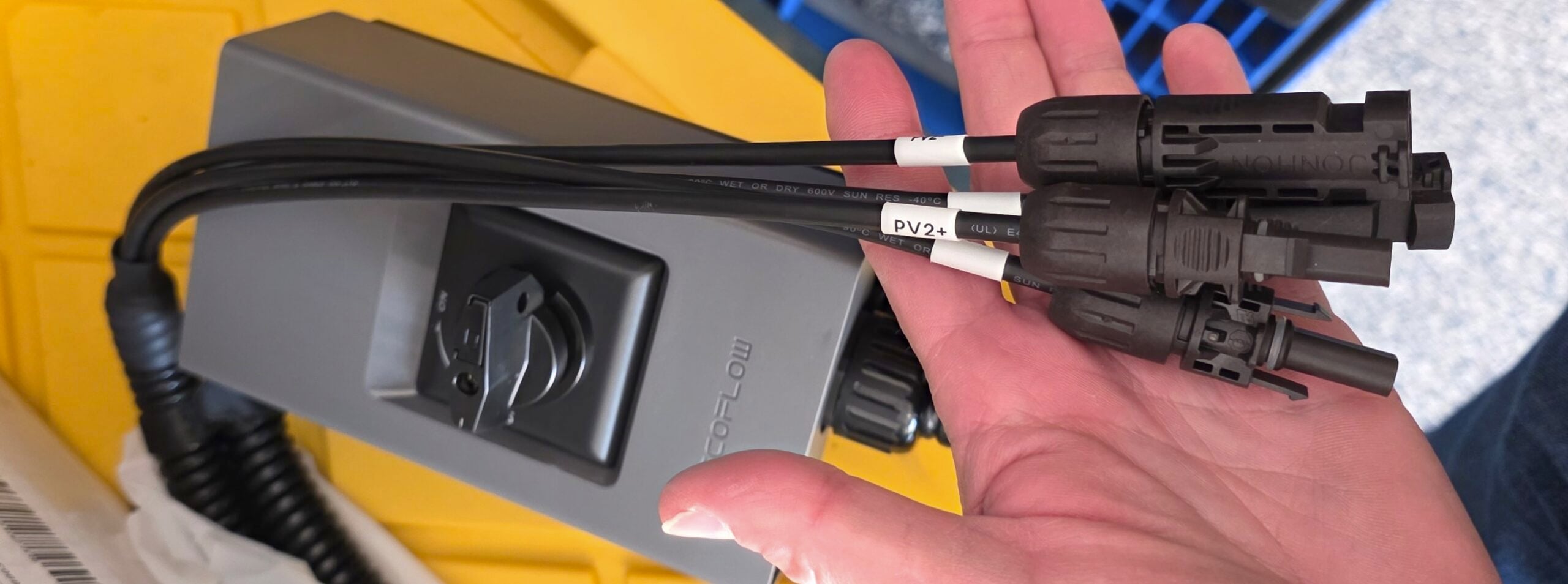
To route properly protected DC conductors from a rooftop array through the roof penetration, down through the building, and to the EcoFlow’s PV inputs, you would need conduit that terminates in a listed junction or pull box, at which point you transition to the MC4 cable. That transition point would need to be listed for the application. No such listed transition exists in the EcoFlow ecosystem because EcoFlow never designed this system for a building-integrated wiring installation.
This is not a technicality that a creative installer can engineer around with a field modification or a custom bracket. The PV Switch Box is the equipment EcoFlow provides for solar connection. It does not accept conduit. The wiring that comes out of it does not comply with NEC 690.31 interior wiring requirements. The system as sold is physically incompatible with legal interior DC wiring.
I pointed this out in the garage at the client’s house. The PV Switch Box, with MC4 leads dangling, is a serious hazard. One dropped item that severs an exposed wire could create a serious arc, leading to a fire or electrocution.
That alone fails the inspection. Before you even get to rapid shutdown, before arc fault, before the Article 706 emergency shutdown, the physical wiring method disqualifies the installation. There is no path to a passed inspection with this equipment as the solar input device in a building-integrated installation.
What the UL Listing Actually Covers
EcoFlow markets the Delta Pro Ultra and Ultra X as UL 9540 certified, and that certification is real. UL 9540 is the system-level safety standard for stationary energy storage systems. Getting it is not trivial, and EcoFlow deserves credit for pursuing it when most competitors have not.
But UL 9540 covers the battery storage system. It covers thermal safety, electrical safety of the inverter and battery integration, and system-level behavior under fault conditions. It does not cover the solar array side of the installation. It does not address rapid shutdown. It does not address DC arc fault protection. It does not address the emergency shutdown initiator required under Article 706.
The listing confirms that the battery system itself is safe for stationary residential installation. It does not confirm that connecting rooftop solar panels to this system is code-compliant. Those are two different questions, and only one of them has been answered.
Standing in That Garage
When I was at my client’s house looking at her system, she wanted to know: “Can we add solar panels to this?” She had been told by whoever sold her the EcoFlow that solar integration was the whole point – that the system was designed for it.
I showed her the PV Switch Box. I explained that the connectors go to the inverter’s MPPT inputs, and that without a listed rapid shutdown system, a listed arc fault circuit interrupter on the DC side, and an externally accessible emergency shutdown function, there is no path to a permitted rooftop solar installation feeding this unit. She would not be able to get a permit. A contractor who pulled one anyway would be putting their license at risk.
She was not happy. Not with me – with the situation. She had made a significant purchase based on a marketing promise that the equipment as sold cannot fulfill in a code-enforced jurisdiction.
That is the story I keep hearing. It was the story in the hallways at NABCEP. It is the story at the permit counter in Lee, Charlotte, and Collier County.
What Actually Works
If you want rooftop solar with whole-home battery backup in Southwest Florida, the systems designed to do exactly that are the Tesla Powerwall 3, EG4 FlexBoss, FranklinWH, and Enphase IQ Battery with IQ System Controller. Every one of these systems, among others, includes a listed rapid shutdown solution. Every one addresses the Article 706 emergency shutdown requirement. Every one includes DC arc fault protection. Every one has a code-compliant path to a permitted rooftop solar installation in Florida.
They cost more than a portable power station setup, but not much more, and you get a whole lot more functionality, not the least of which is the option to interconnect with the grid for netmetered solar panels (huge economic benefit). They require a licensed contractor and a building permit. And they actually do what the marketing says.
Already Installed An EcoFlow Delta Pro Ultra X: The Workaround
If you already own one of these systems and you are not ready to write it off, there is a practical path forward — and it actually results in a better overall setup than the EcoFlow alone ever could have delivered.
Install a Tesla Powerwall 3 or similar code-compliant battery system with rooftop solar connected to the grid. The Powerwall handles everything a permitted Florida solar-plus-storage system is supposed to handle: rapid shutdown-compliant solar, FPL net metering, automatic grid transfer, and whole-home backup. Your EcoFlow sits downstream, connected to the Powerwall’s backed-up loads.
Here is what happens during an outage. The Powerwall comes online first and powers your home. If the outage runs long enough to drain the Powerwall completely, the EcoFlow automatically takes over and continues running your critical loads. The next morning, when the sun comes up, the Powerwall recharges from solar first, comes back online as primary, and then the EcoFlow can recharge from whatever excess capacity is available.
You now have two layers of backup. The EcoFlow, which you already paid for, earns its keep as a secondary reserve. The Powerwall does the permitted, grid-connected, solar-charging work it was designed to do.
It is not seamless. There are real operational quirks you should know about before you set it up and walk away.
The biggest one: if the Powerwall’s state of charge is low and the EcoFlow starts drawing power to recharge itself, it can pull the Powerwall back down below its transfer threshold. The Powerwall goes offline. The EcoFlow takes over as primary. The Powerwall sees available power again and tries to come back online. Repeat. You end up with a system toggling back and forth until there is enough solar production to satisfy both loads simultaneously. It is not damaging, but it is annoying, and it shortens the number of full charge cycles on both systems.
The fix is straightforward: limit the EcoFlow’s charge rate to a low value — 200 to 500 watts — so it draws gently rather than in a burst. Monitor the Powerwall state of charge manually for the first few days after an outage until you have a feel for your system’s production curve and load behavior. Once the sun is well established in the morning and the Powerwall is above 50 percent, you can let the EcoFlow charge more aggressively.
This is not an off-the-shelf solution with a one-page setup guide. It takes some tuning. But it is a real answer for homeowners who made a significant investment in an EcoFlow and want to get value out of it rather than let it collect dust while a proper system does the actual work.
And to be clear about why this matters for Florida specifically: the Powerwall handles the rooftop solar integration and the FPL net metering interconnection. That is what you want in a state where the sun is the primary energy asset and the grid is the backup resource, not the other way around. The EcoFlow gets to ride along for free.
The Bottom Line
I know – it’s hard to believe. People can’t fathom that a manufacturer would market a product for a purpose that it can’t legally fulfill. But that’s the case. I would take it up with the manufacturer, or better yet, the FTC’s Bureau of Consumer Protection or Division of Advertising Practices. I think it’s egregious that manufacturers mislead buyers like this.
The EcoFlow Delta Pro Ultra X is a legitimately impressive piece of hardware. The UL 9540 listing is real and meaningful. But marketing it as compatible with rooftop solar panels, and implying that integration is straightforward, misrepresents what the system can legally do in any jurisdiction that enforces the NEC and Florida Building Code. There is no listed rapid shutdown solution for this system. There is no DC arc fault protection on the PV inputs. The system has no way to enclose 500V solar circuits in metallic conduit. Those are not minor details. They are the difference between a permitted, code-compliant installation and one that cannot be legally inspected or insured.
If you already own one of these systems and you are counting on adding rooftop solar, call us before you proceed. We will give you an honest assessment of your options. If you are still in the planning stage and you want a battery backup system that can legally work with rooftop solar panels in Florida, we can design that system for you from the start.


I just purchased the DPUX after much research. My is cuurrently not contected to any solar as it was a future consdieration. My primary goal was grid backup and I currently have AC grid as the recharging method. I just installed Ecoflows flowmaster unit to enable a generator hookup thru the DPUX. This uses the solar inputs. My system is installed in the garage. I planed to pursue solar in the future and despite my best efforts (and expense) I am slightly peeved that this is not “clearly” mentioned in the marketing materials. The DUPX is a fine unit, but what good is it if you can’t use it for it’s intended purpose.
Be careful with the Flowmaster. I have not been able to find any information about whether this is UL Listed. It may be a code violation in a permanently installed system. I could be wrong, but there is such a dearth of information with these systems that it is hard to determine whether they can be legally installed.
How about a TIGO disconnect system for the rooftop solar, and then proper conduit down to the ecoflow system.. Gives you remote disconnect buttons, disconnect for all panels, and energy management.
That’s the problem – there is no way to connect conduit to the EcoFlow Delta. It is designed to connect PV with MC4 connectors. It’s completely exposed, and frankly, very dangerous.