Skip to content
logo 1
  • Home
  • Products
    • Solar Electricity
    • Solar Hybrid Electric Pool Heating
    • Battery Backup
    • Solar Pool Heating
  • Service
  • Education
  • About
  • Solar Tools
  • Contact
  • Home
  • Products
    • Solar Electricity
    • Solar Hybrid Electric Pool Heating
    • Battery Backup
    • Solar Pool Heating
  • Service
  • Education
  • About
  • Solar Tools
  • Contact
(239) 491-8010
logo 1
  • Home
  • Products
    • Solar Electricity
    • Solar Hybrid Electric Pool Heating
    • Battery Backup
    • Solar Pool Heating
  • Service
  • Education
  • About
  • Solar Tools
  • Contact
  • Home
  • Products
    • Solar Electricity
    • Solar Hybrid Electric Pool Heating
    • Battery Backup
    • Solar Pool Heating
  • Service
  • Education
  • About
  • Solar Tools
  • Contact

Opinion

Solar Education

Main Menu
  • Select Category
    • Solar Electricity
    • Photovoltaic
    • Solar Pool Heating
    • Battery Backup
    • Solar Panels
    • Solar Design
    • Solar Water Heating
    • Solar Hybrid Electric Pool Heating
Tesla just published its Powershare application note for Powerwall systems, and I'm genuinely glad it exists. For years, using your Tesla to back up your home has been a marketing slide with no installer documentation behind it. Now we finally have part numbers, wiring rules, and a plain description of how the system behaves when the grid goes down. That last part is the problem. Read the outage sequence closely and you'll see exactly why we still don't recommend counting on an EV for home backup in Southwest Florida. Tesla Powershare drains your Powerwall first, every time, and there's no way to change it. What Tesla Powershare Actually Does Powershare lets a compatible Tesla vehicle, plugged into a Tesla Universal Wall Connector or Gen 3 Wall Connector, send power back to your home through your Powerwall system during a grid outage. Tesla calls this Vehicle-to-Home, or V2H. Right now, the feature works with Powerwall 3. Powerwall 2 and Powerwall+ systems can be wired for it today, but Tesla lists the feature itself as coming soon for those batteries. On the vehicle side, Cybertruck is supported, and Tesla says every Model 3 and Model Y ordered in the U.S. after October 1, 2026 is capable. Older Model 3 and Model Y owners have to check whether their specific car qualifies. The good news is there's no extra box on the wall. The Wall Connector has to sit on a backed-up circuit, the feature gets switched on during commissioning, and the Powerwall and Wall Connector need to share the same Wi-Fi network. That's the whole recipe. The Sequence Is Fixed: Powerwall First, Car Second Here's how Tesla describes outage behavior. The grid drops. The gateway disconnects your home from the utility. The Powerwall powers the house. When the Powerwall gets down to a low charge, the car kicks in, powering the home and recharging the Powerwall at the same time. Once the Powerwall is back up to a high charge, the car stops and the Powerwall takes over again. Then it repeats. Powerwall drains, car refills it, car steps back. Over and over until the grid returns or the car runs out. That's the only behavior available. In Tesla's commissioning app, Powershare Home Backup is a single toggle. On or off. There's no priority setting, no "use the car first" option, no way to tell the system that today, in this storm, you'd rather spend the car's energy before touching the home battery. Sometimes Powerwall-first is exactly what you want. But sometimes it's exactly backwards. Why Powerwall-First Can Be Backwards in a Hurricane Picture a Southwest Florida hurricane. Not a glancing blow. The kind where FPL or LCEC tells you it could be a week or more. For the first few days, you're not going anywhere. Roads are blocked by debris, some are flooded, bridges may be closed, and there's a curfew. Your Tesla sits in the garage at 100 percent. Meanwhile, your Powerwall is carrying the house. Refrigerator, freezer, lights, maybe a window unit or a mini split. Night after night, it cycles down, and the car tops it back up. Now think about which battery can actually go get more energy. The Powerwall is bolted to your wall. The car has wheels. Once the roads open, the car is the only battery that can drive to a Supercharger in an area with power, refill, and bring that energy home. So in a long outage, the logical strategy is to spend the mobile battery while you're stuck at home and keep the stationary battery full. When the roads clear and you're ready to go out, the car is the one that's low, which is fine, because you're leaving specifically to recharge it. The Powerwall stays home, full, protecting your refrigerator, your medical equipment, and whoever stays behind. Tesla's sequence does the opposite. The car sits nearly full while the Powerwall does the work. The day you can finally leave, there's a real chance your Powerwall is sitting near its low point while your car still has most of its charge. Now you've got two bad options. Unplug and leave the house running on a nearly empty home battery for however long the round trip takes. Or wait for the car to refill the Powerwall first, burning hours you could have spent recharging the car. You end up with energy in the car that you need in the house, and an empty battery in the house that can't go anywhere to fix itself. That doesn't make sense. A simple setting would solve it. Something like "power the home from the vehicle first, down to 25 percent, then switch to Powerwall." It doesn't exist. To Be Fair, There's a Case for Tesla's Default I'm not going to pretend Tesla's choice is crazy. If there's any chance you'll need to evacuate on short notice, a full car is your way out. Protecting the car's charge protects your exit, and that's a reasonable priority for a lot of households, especially in evacuation zones on the barrier islands. The problem isn't that Tesla picked the wrong order. The problem is that Tesla picked one order for everybody and locked it. The right priority depends on where you live, who's in the house, what the storm did, and what you're planning to do next. It can even change halfway through the same outage. That's precisely the kind of decision a homeowner should be able to make in an app. Every Trip Through an Inverter Costs You Something There's a second, quieter issue with the Powerwall-first design. When the car steps in, it doesn't just power the house. It also recharges the Powerwall, and that energy later comes back out of the Powerwall to run your loads. Every time energy gets converted from battery power to household power and back again, a little bit is lost as heat. Sending car energy into the Powerwall and then back out to your refrigerator involves more of those conversions than simply running the refrigerator from the car. In a normal week, nobody would notice. In a ten-day outage where every kilowatt-hour matters, it adds up. Tesla's Own Document Says Not to Count on the Car Here's the part of the application note I want every homeowner to read. In the system design section, Tesla tells installers this: "It is important to design the system assuming the vehicle may not be plugged in during a grid outage." That says it all. The manufacturer of the car, the charger, and the battery is telling installers not to treat the car as backup. That's not me being a skeptic. That's Tesla's own engineering guidance. We agree with it completely. The car might be at work when the storm knocks out power. It might be at a relative's house. It might have evacuated with half your family. Your Powerwall system needs to carry your critical loads on its own, and it needs to start the storm full. If you haven't looked at how your Powerwall is set up, our post on Powerwall backup reserve settings for Florida homeowners explains why we set reserves high for hurricane country. There are a couple of other details in the document worth knowing. The Wall Connector has to be treated as a power source when we calculate what your main electrical panel can safely handle, which can affect the design and occasionally the cost. And Powershare depends on your home Wi-Fi network. In a hurricane, that means your router and modem need to be on backed-up power, and you're relying on your home network staying up for your backup to work the way it should. I wouldn't want to find out what happens when Wi-Fi drops in the middle of a storm. Even Elon Musk Says the Car Is a Supplement This isn't a new position for Tesla's leadership. At Tesla's Investor Day in March 2023, when the company first said bidirectional charging was coming, Elon Musk immediately poured cold water on using the car alone to power a home. His reasoning was simple: if you unplug your car, your house goes dark. He said he didn't expect many people to use the feature unless they also had a Powerwall, with the car acting as a supplementary energy source to the home battery. Supplementary. That's the right word, and it's the word we've been using with clients for years. Your EV can be a handy extra fuel tank during a long outage. It is not the backup system. There's also the wear question. Using your car as a home battery puts cycles on a pack that was designed to move a vehicle, not run a house. I covered that in more detail in Bidirectional EV Charging: A Smart Idea, Until You Lease the Car. In a true emergency, battery wear is the least of your worries. As a daily strategy, it's a different conversation. Southwest Florida Homes Make This Harder Most of the vehicle-to-home marketing you'll see was written for homes that don't look like ours. A typical Lee or Collier County home runs central air most of the year, often has an electric water heater, an electric range, a pool pump, and sometimes a second refrigerator in the garage. Those loads drain any battery fast, car or Powerwall. That's why we design backup around what the house actually needs, not around what a car could theoretically contribute. If you want to see how a Powerwall system behaves through an outage with your kind of loads, try our Powerwall Simulator. It's a much better starting point than guessing how many days a car battery might buy you. The Bottom Line on Tesla Powershare for Home Backup Tesla Powershare is real, it's documented, and if you already own a compatible Tesla and a Powerwall 3, it's a nice feature to switch on. We'll install it. But understand what you're getting. The order is fixed. Your Powerwall drains first and the car refills it, whether that suits your situation or not. In a multi-day hurricane outage, that can leave your home battery low at the exact moment you need to take the car out to recharge. Treat your EV as a bonus tank, not a backup plan. Size your Powerwall system to carry your critical loads without the car, keep your backup reserve high during storm season, and put your router on backup power if you plan to use Powershare. And if Tesla ever adds a setting that lets you choose which battery goes first, I'll be the first to write about it. If you want a backup system designed for how Southwest Florida outages actually play out, with Powershare as a bonus rather than a crutch, that's exactly what we do at Florida Solar Design Group. Reach out and we'll look at your home, your loads, and your vehicle, and design around reality.

Tesla Powershare: A Nice Bonus, Not a Backup Plan

Jason Szumlanski October 7, 2026
September Breaks Off-Grid Systems in Southwest Florida

What Makes September So Challenging For Off-Grid Solar Homes?

Jason Szumlanski September 20, 2026
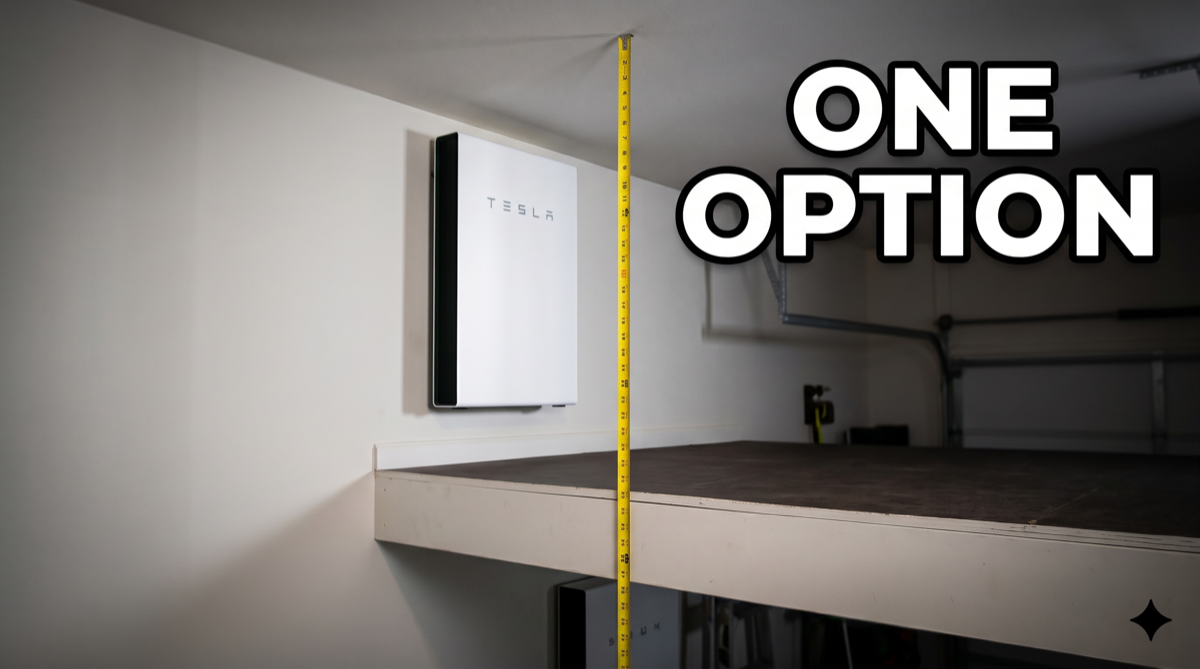
Battery Installation Height Limits

Battery Installation Height Limits: What Flood Elevation Does to Your Options

Jason Szumlanski September 2, 2026

Tesla Discontinued the Solar Roof. The Local Fallout Is Already Here.

Jason Szumlanski September 1, 2026
Solar Direct DC Pool Pump Mistake

Why We Do Not Recommend DC Solar Pool Pumps

Jason Szumlanski October 4, 2026
Plug-In Solar Is Here, and It Was Never Designed for Your Battery System UL 3700

Plug-In Solar Is Here, and It Was Never Designed for Your Battery System

Jason Szumlanski July 26, 2026
The Sad Truth About Solar Panel Warranty Claims

The Sad Truth About Solar Panel Warranty Claims (And Why Just Replacing the Panel Is No Easy Fix)

Jason Szumlanski October 4, 2026
FPL TOU Rates With Battery for Arbitrage

FPL Time of Use Rates With Batteries for Arbitrage

Jason Szumlanski August 9, 2026
EG4 Monitoring App Alternative

EG4 Monitoring Alternative: FourScoped App

Jason Szumlanski June 11, 2026
What is Whole Home Backup

What “Whole Home Battery Backup” Actually Means in Florida (And Why the Answer Might Surprise You)

Jason Szumlanski October 4, 2026
What is Enphase PowerMatch

What is Enphase’s PowerMatch Feature

Jason Szumlanski June 8, 2026
Solar Panels on High Rise Condo Roofs in Florida

Why Condo Solar Projects Almost Never Work in Southwest Florida

Jason Szumlanski May 20, 2026
EcoFlow Ocean Not Ready for Professional Solar Contractors

EcoFlow Ocean Pro: Why Serious Solar Pros Are Not Buying It Yet

Jason Szumlanski October 4, 2026
Dominick Not What they are selling you 2

It’s Not What They’re Selling You. It’s What They’re Not Telling You.

Dominick Zito October 4, 2026
Watch Will Prowse, then Hire a Professional

I Watch Will Prowse Too. Here’s Why That’s Not Enough.

Jason Szumlanski October 4, 2026
AI Gets Solar Panel Research Wrong

Why Your ChatGPT Solar Panel Research Is Probably Wrong

Jason Szumlanski October 4, 2026

The 25-Year Lock-In: Why Prepaid Solar Leases Are a Bad Deal

Jason Szumlanski April 28, 2026

The Buy Here, Pay Here Lot Of Solar

Dominick Zito October 4, 2026
LCEC Rate Hack with Solar

LCEC’s Rate Structure Quirk That Saves Solar Customers Hundreds a Year

Jason Szumlanski October 4, 2026
AC Coupling Off-Grid Voltage Rise Considerations

AC Coupling Off-Grid: Voltage Rise Considerations

Jason Szumlanski April 28, 2026
Solar Fencing - Is it Possible In Florida

Solar Fences: Cool Concept, Bad Idea for Southwest Florida

Jason Szumlanski April 12, 2026
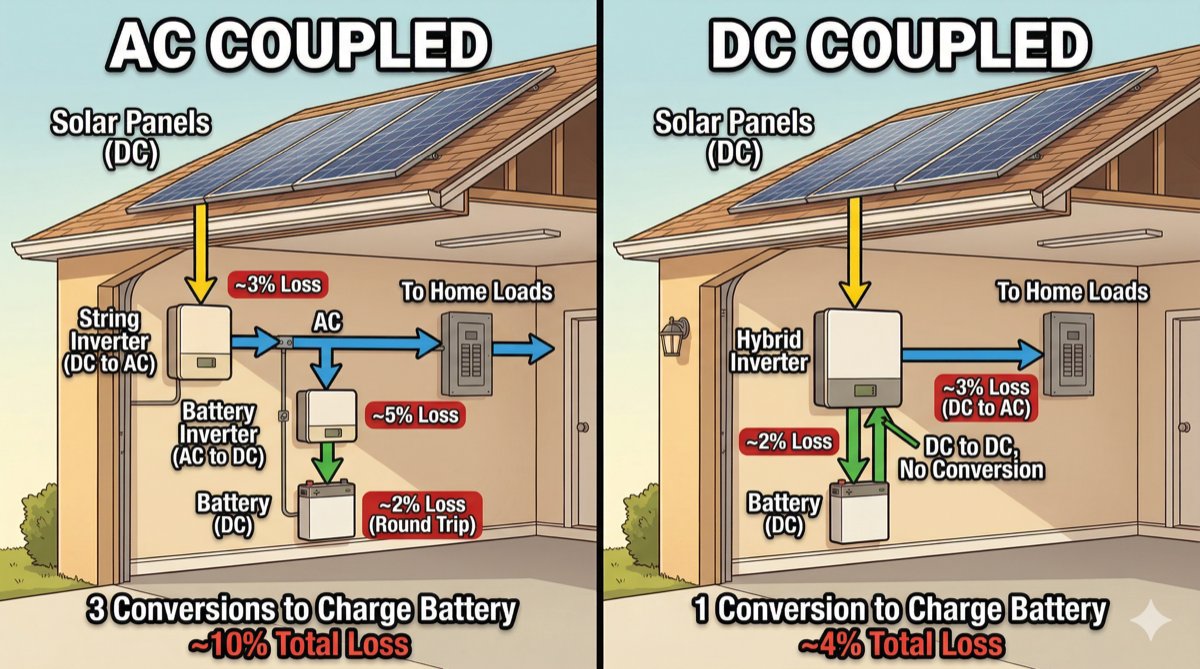
AC Coupling vs DC Coupling

AC Coupling vs. DC Coupling: Which Is Better for Solar Batteries in Florida?

Jason Szumlanski October 4, 2026
Battery Backup Without Solar

Why Battery Backup Without Solar Is a Legitimate Option in Florida

Jason Szumlanski October 4, 2026
Enphase Field Service Technicians Do Free Warranty Repairs

Enphase Field Service Technicians Are a Hidden Asset

Jason Szumlanski April 8, 2026
ESS Limits For Multiple Attached Garages In Homes

Residential Battery Limits Are Per Location Not Per Dwelling

Jason Szumlanski April 8, 2026

Why Soft Starters Are No Longer Standard for Battery Backup

Jason Szumlanski August 9, 2026
EG4 GridBOSS Off-Grid

Is the EG4 GridBoss Right for Your Off-Grid System?

Jason Szumlanski April 4, 2026
Residential Ice Storage versus Solar With Batteries

Ice Storage Air Conditioning: Why Batteries Win for Homeowners

Jason Szumlanski October 4, 2026
Floatovoltaics: Floating Solar Panels

Floatovoltaics: Bonita Springs Utilities Goes Solar on Water

Jason Szumlanski October 4, 2026
Solar Lease Agreements Suck

Solar Lease vs. Buying in 2026: What the Sales Pitch Doesn’t Tell You

Jason Szumlanski October 4, 2026
« Previous Page1 Page2 Page3 … Page7 Next »
logo 1
  • Main Office Address
    12801 Commerce Lakes Dr Ste 12
    Fort Myers, FL 33913
  • (239) 491-8010
  • Monday - Friday: 8am – 5pm
    Saturday - Sunday: Closed

Company

  • About Us
  • Solar Electricity
  • Solar Pool Heating
  • Solar Water Heating
  • Financing
  • Contact Us
  • About Us
  • Solar Electricity
  • Solar Pool Heating
  • Solar Water Heating
  • Financing
  • Contact Us

Resources

  • Solar FAQs
  • Solar Glossary
  • Blog
  • Testimonials
  • Case Studies
  • Solar FAQs
  • Solar Glossary
  • Blog
  • Testimonials
  • Case Studies
image 6
  • Florida State Certified Solar Contractor CVC56956
  • Florida Certified Electrical Contractor EC13013208

Follow us on:

Youtube Facebook Instagram X Twitter
©2026 FSDG. All rights reserved.
Privacy Policy