Cold Beer After the Storm: A Solar Battery System’s Silent Victory on Sanibel
A week after Hurricane Ian made landfall, I found myself loading into a boat in Cape Coral with a family I had never met and a captain who looked more like a warrior than a tour guide. The Sanibel Causeway was gone. Roads were impassable. Internet and cell service were still completely wiped out. The only way to reach the island was by water, and even that wasn’t guaranteed.
A client had asked if I could check on their home to see if their battery backup system had held up. There was no way to confirm it remotely. Everything we relied on – remote monitoring, Internet service, cellular backup, everything was offline. We were flying blind.
The plan was to make a beach landing on West Gulf Drive. No dock. No markers. Just debris-strewn water and a GPS dot on a phone that had no cellular service.
Crossing In and Landing on the Island
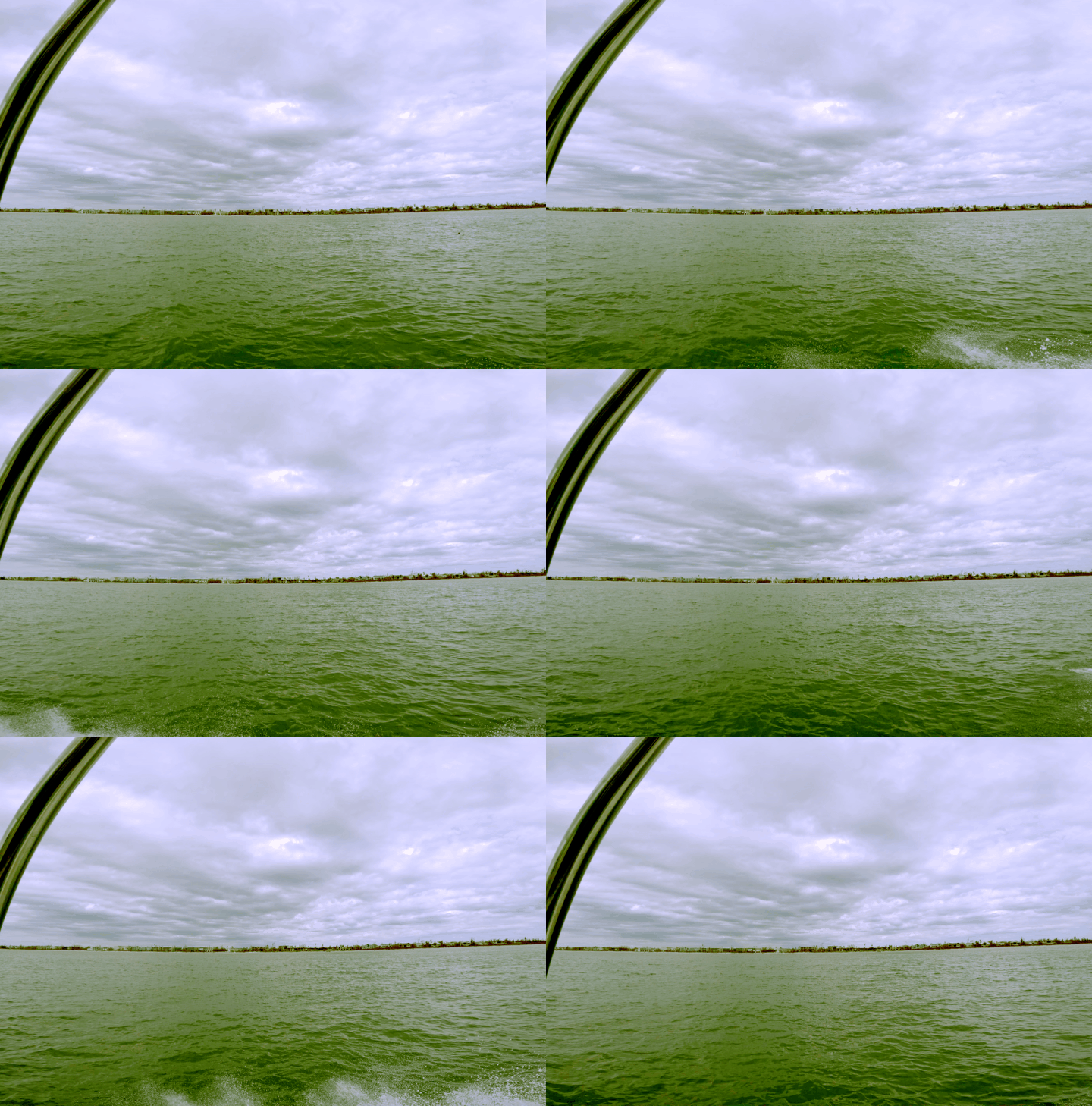
The ride over was tense. We passed shattered docks, sunken vessels, and various house “parts” floating offshore. The captain weaved through it all with a watchful eye. The family was quiet, clearly bracing for what they might find.
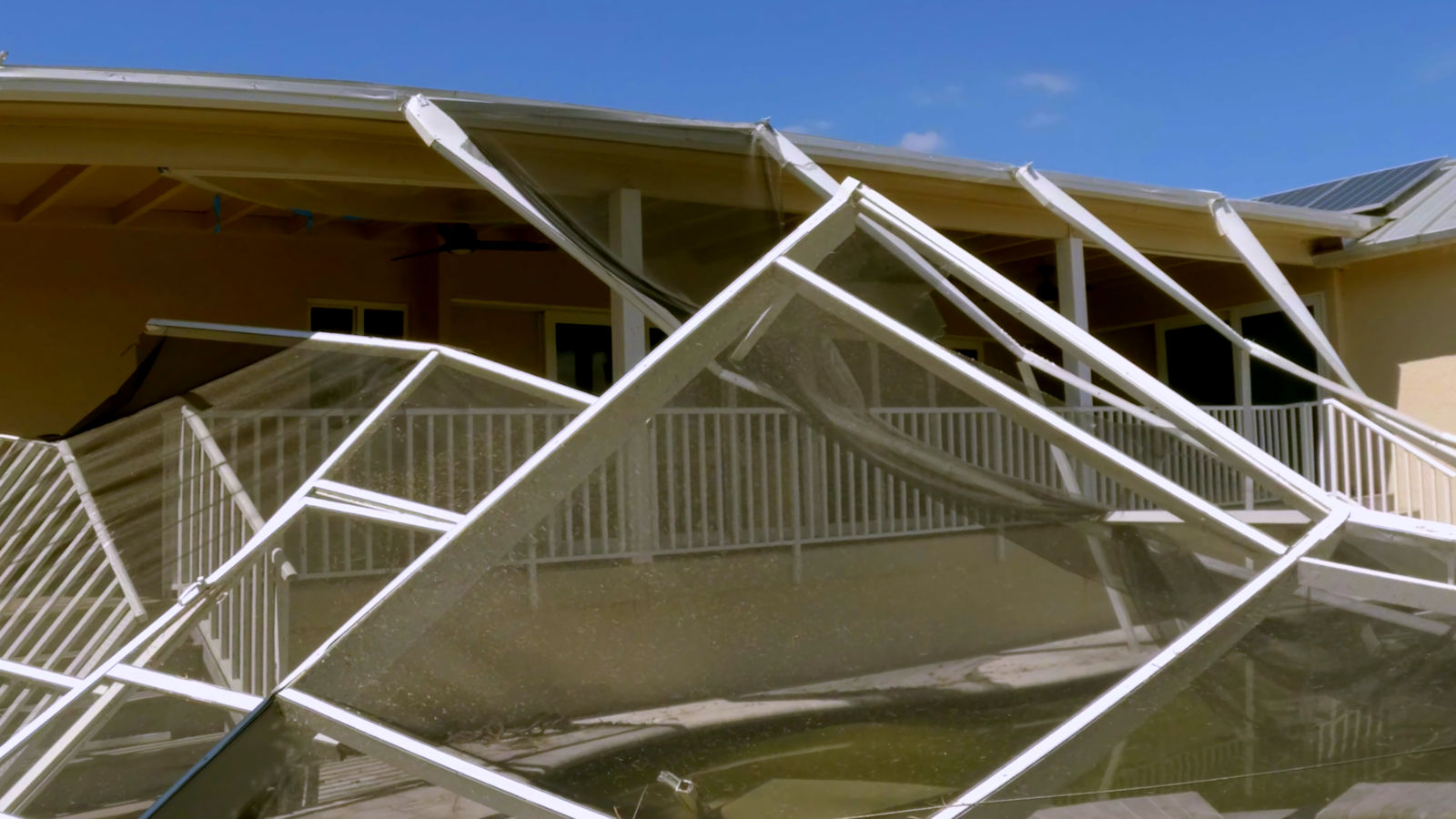
We landed the boat in knee-deep water and stepped onto a sand-covered beach that looked more like a war zone than a tourist destination. From there, it was a long walk down sand covered streets to the family’s home. The authorities had bulldozed the sand into passable streets by then, but there was no asphalt to be seen. Everything was covered in sand and muck.
Devastation in Every Direction
What struck me first was the silence. Not just the absence of people, but the lack of the usual hum of generators, air conditioning, or anything mechanical. By then, most of the portable generators had run out of fuel. The only sound was the wind sifting through broken palms and the occasional helicopter overhead.
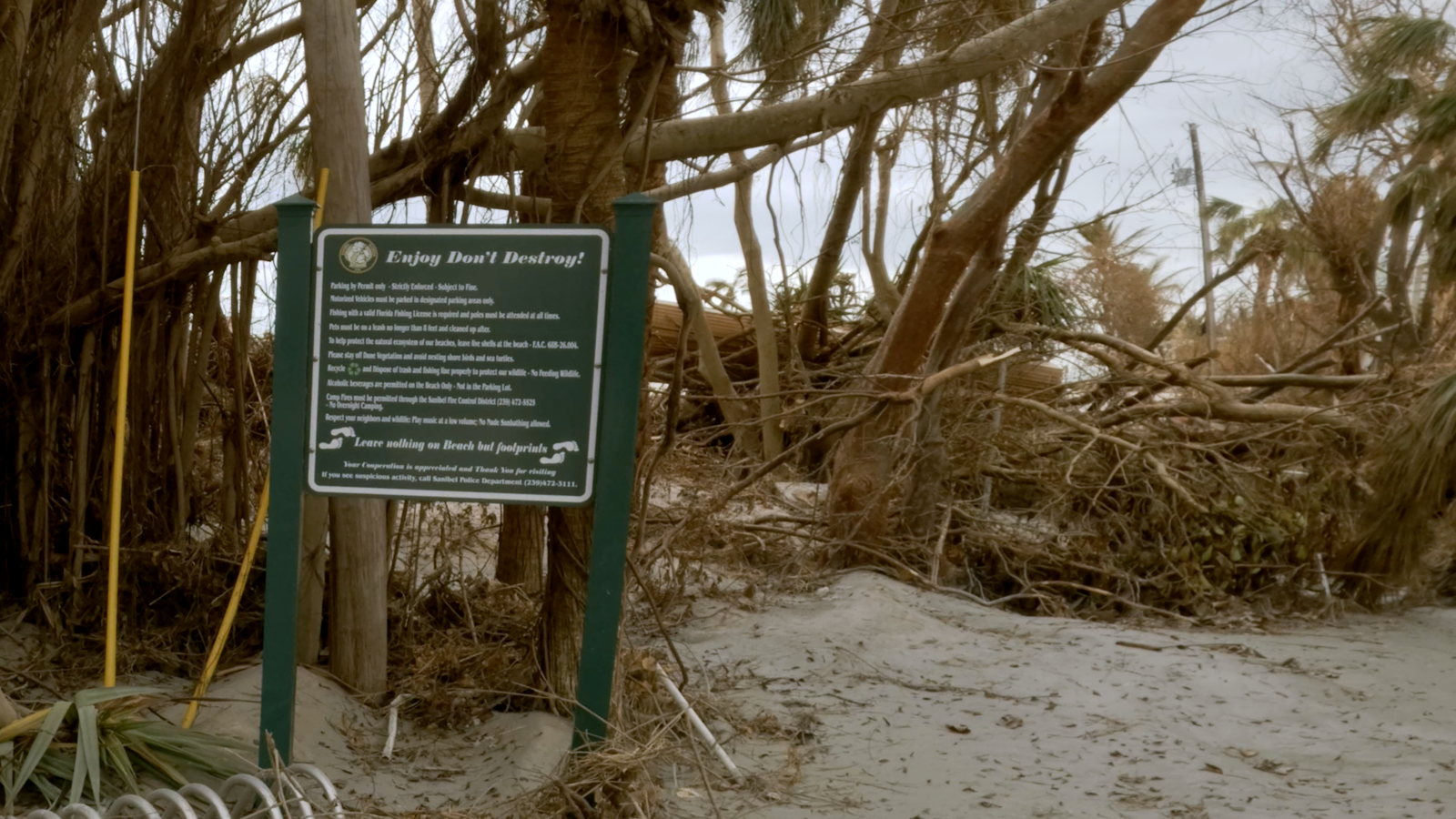
Walking those streets alone was sobering. Garage doors had been blown clean off. Roofs were missing. Palm trees were stripped bare. Debris blanketed every driveway. And in all of it, not a soul in sight. I remember thinking: Where are the animals? Where is anyone? It felt like I was the last person on the island.
We reached the family’s home, and it hit hard. The structure was standing, but the interior was soaked and torn apart. And when they stepped inside and saw the damage, they broke down in tears.
Through the tears, they got to work. Drywall was already being cut away. Furniture was being dragged out. I stayed for a while and helped them carry out their belongings, stacking what could be salvaged and trying to keep some items dry. But I had to keep moving. There was another house I needed to check.
A Mission to Validate Solar + Storage
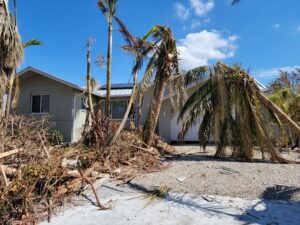
Truth be told, I wasn’t even sure I was allowed to go. Contractors weren’t permitted on the island unless accompanied by a resident, and I was pushing the limits of that rule. But this wasn’t just a job check—it was a test. We had a handful of solar battery systems installed on Sanibel before Ian, and this was one of them.
I made my way further down the street, still completely alone. It felt risky, surreal. But I eventually reached the client’s home, and it was intact.
I stepped inside. No broken windows. No visible water damage. Just… quiet.
Then I felt the cool air. The thermostat read 78 degrees—exactly what it had been set to before the storm. It was surreal. It still hadn’t hit me that the power was ON!
I was documenting the visit for my client and had my trusty GoPro in front of me as I walked around the house, barefoot so as not to track muck from my shoes through the house. And then came the moment of revelation. I opened the fridge. Inside: cold beer!
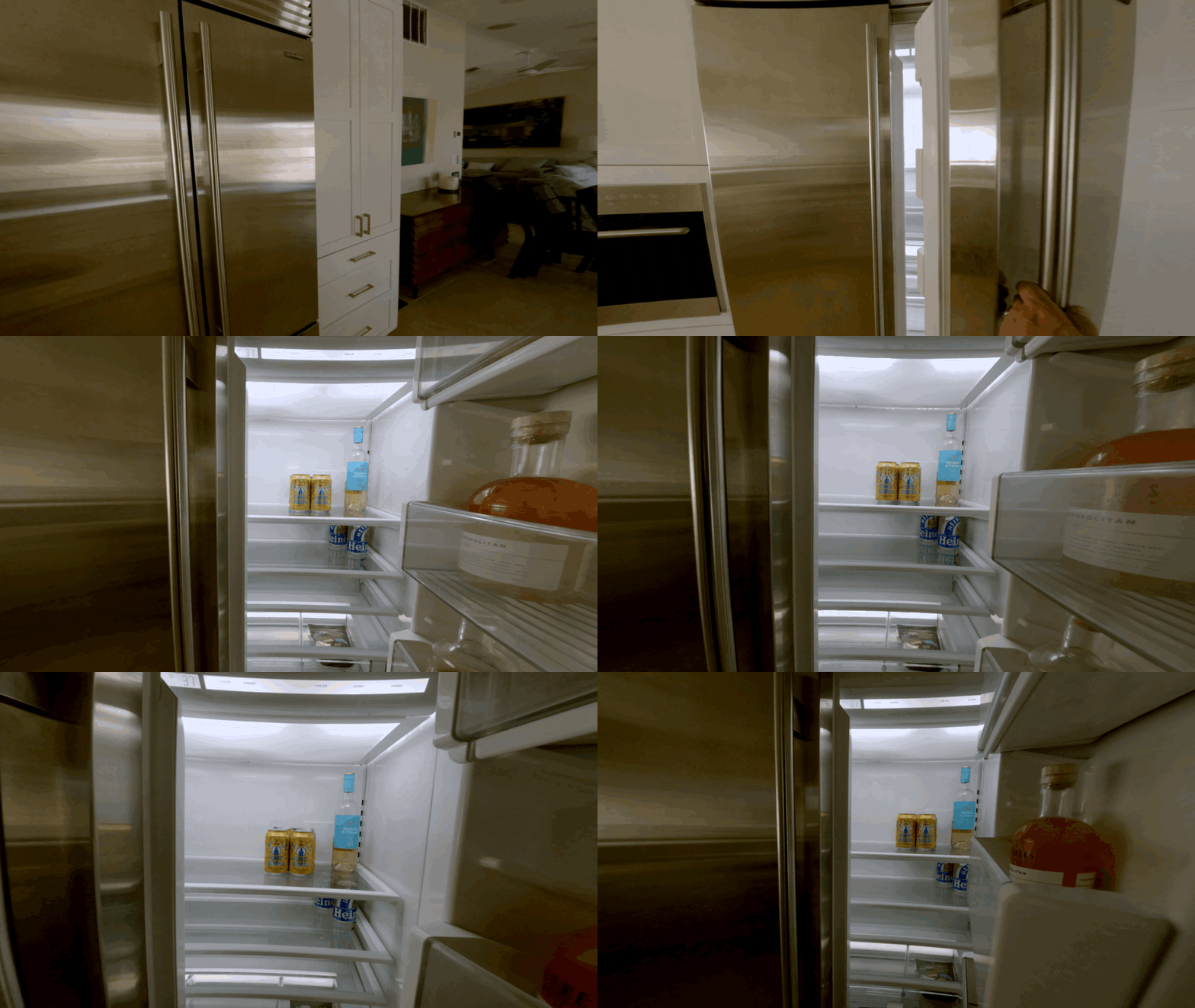
It had finally set in. We succeeded. We won. In a small way, we beat Hurricane Ian. And the reward was right there in front of me.
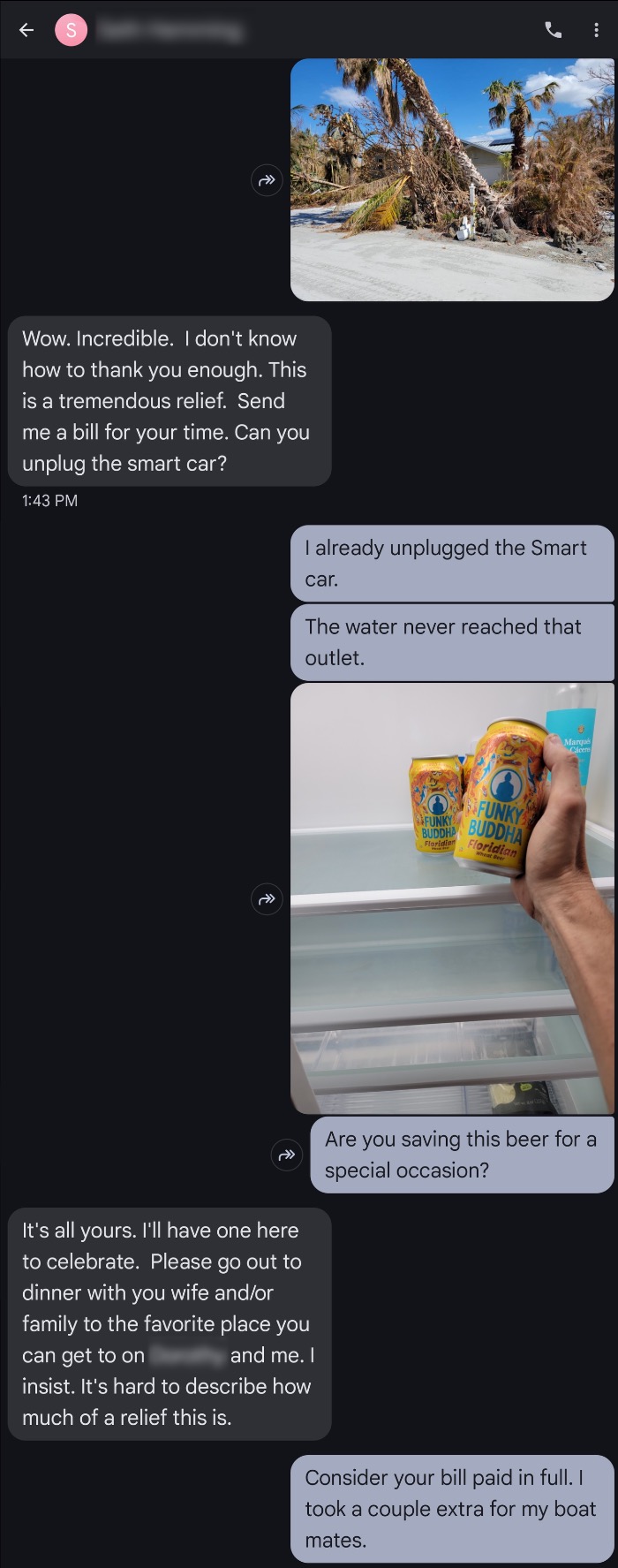
I sent a text to the owner to reassure him that everything was okay. Here is how that went:
The System That Didn’t Blink
This house had power the entire time. The Enphase 10T system with 30 kWh of battery storage and a 9 kW microinverter array had carried the load through the storm and through the week that followed. And it continued to power the home through the recovery.
This wasn’t a partial backup system. It was designed to handle the whole home, and it did. While everything else on the island went dark, this house kept running. The AC was on. The fridge was cold. Outlets worked. Lights worked. If the homeowners had been there, they could have stayed.
There were no alerts or monitoring data to confirm anything until I walked in. But in that moment, the system’s performance spoke for itself—silently, reliably.
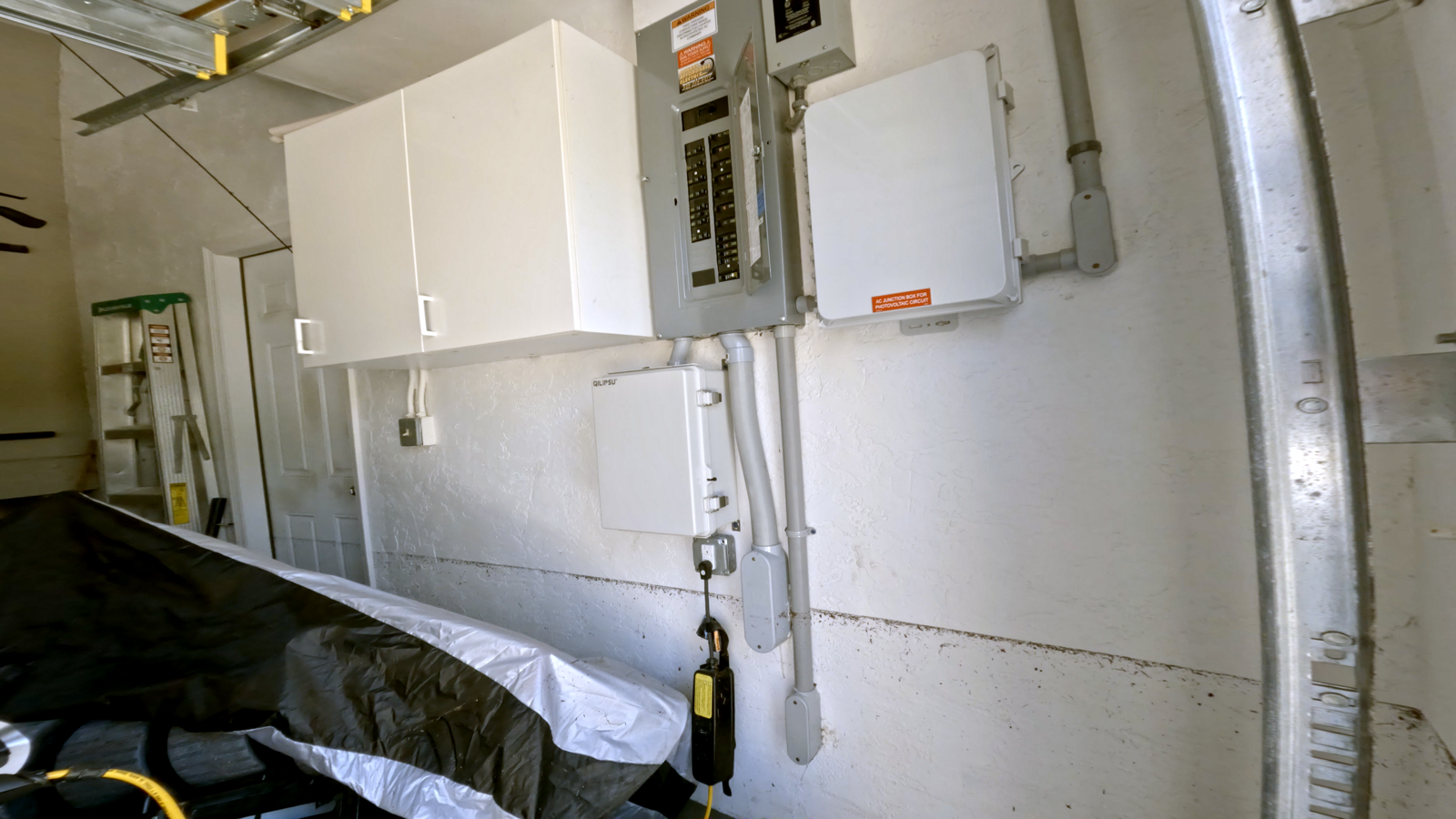
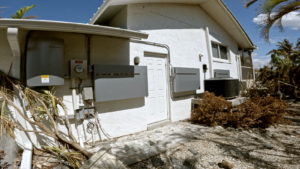
Something I will never forget is all of the scumlines on homes after the storm. You could see exactly how high the storm surge had gotten. At this house, it was well below where we had put the electrical gear, and just a foot under the batteries. Fortunately the batteries we used are sealed, so even if they were submerged by a foot or two of water, they likely would have continued to operate, as long as the associated electrical components stayed dry.
After Ian: A Shift in the Market
Before Hurricane Ian, most solar customers in Southwest Florida were focused on grid-tied systems. Batteries were often seen as a luxury or an afterthought—too expensive, too complex, too early.
That changed overnight.
Since the storm, interest in solar-plus-storage has exploded. Nearly half of the systems we now design include some form of battery backup, even if it’s just to cover essential loads. People understand now: it’s not about whether the grid is reliable—it’s about whether you want to be.
What Homeowners Should Know About Battery Backup
-
- Solar panels alone don’t keep your lights on when the grid goes down.
- Battery backup gives you true independence, especially in extended outages.
- Systems can be tailored to your needs, from critical loads to whole-home coverage.
- You don’t need to be home for the system to work. That Sanibel house proved that.
- Design and quality matter. Because you won’t know it works until it matters.
In Closing: A Cold Beer and a Lesson in Resilience
That fridge, still humming, still cold, wasn’t just keeping beer chilled. It was proof that well-designed solar and battery systems work. Not in theory. Not in a lab. But in the real world, when everything else fails.
There are plenty of ways to measure success. For me, that day on Sanibel was one of the most rewarding moments in my career. Not because we sold a system, but because it did what it was supposed to do when nothing else did.
On the return boat ride, I cracked open one of those Funky Buddhas, which happens to be the type I like – an IPA. Beer never tasted so good. It was the taste of victory. I shared the rest with my fellow travelers, who were in a much more melancholy mood, understandably. But they sure appreciated a cold beverage in that moment, and were kind of dumbstruck over how I emerged with a cold six-pack.
If you’re thinking about battery backup, stop thinking and start planning. Because the next storm won’t care whether you’re ready. But your solar system should.
Want to talk about solar and battery options? We’ve been designing resilient systems for years, before it was trendy. Get in touch.