The Sales Pitch Sounds Great. The Math Doesn’t.
Smart panels are having a moment. If you have a battery backup system and you’ve spent any time online researching how to get more out of it, you’ve probably come across SPAN or a similar smart electrical panel. The pitch is compelling: install a smart panel, get circuit-level control over your home, and stretch your battery capacity by up to 40%. Who wouldn’t want 40% more from their battery?
Here’s the problem. That 40% isn’t more energy. It’s the same energy, managed more tightly. And for roughly the same installed price, you could just add more battery.
I get this question from clients regularly, and the answer keeps coming back the same way. Let me walk through it.
What a Smart Panel Actually Does
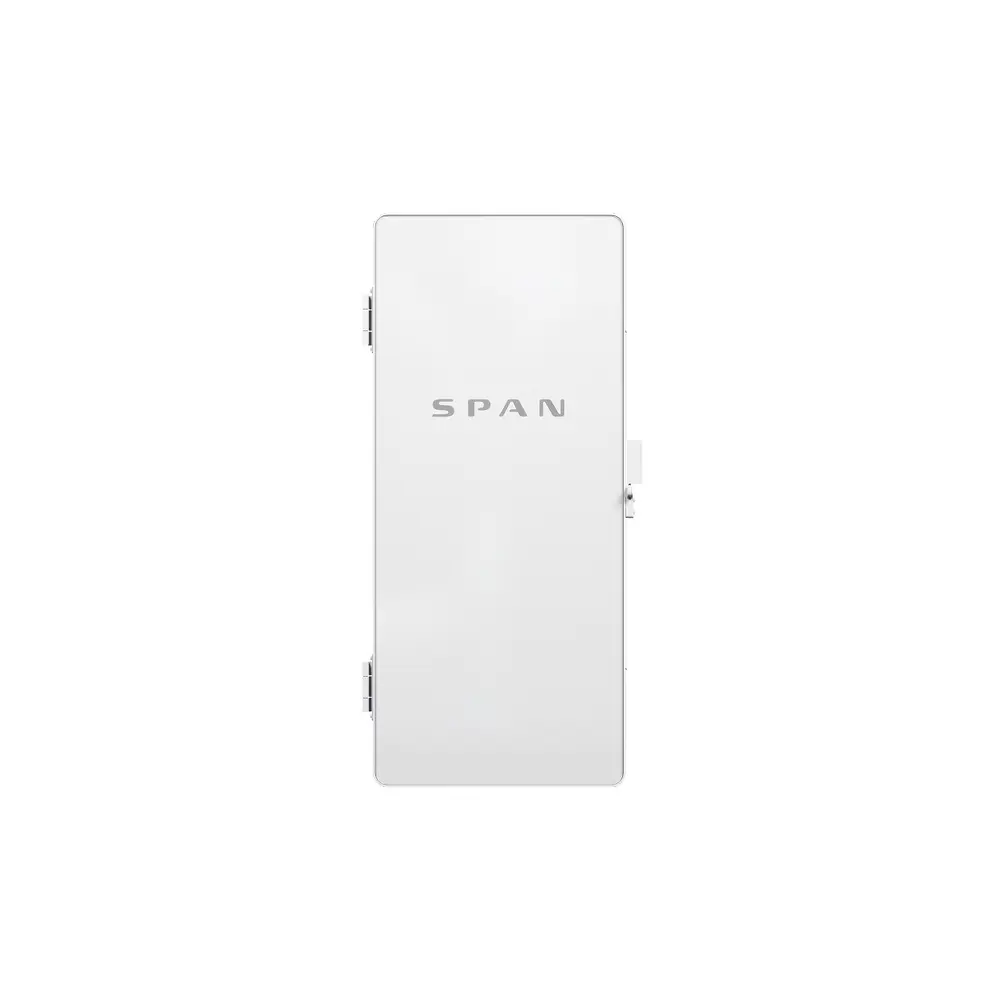
A smart panel like SPAN replaces your standard electrical panel and adds individually controllable circuit breakers. Through an app, you can see real-time energy usage per circuit and turn circuits on or off, either manually or through automated rules. During a power outage, the panel can automatically shed non-essential loads like your pool pump, your dryer, that second refrigerator in the garage, so your battery lasts longer powering the things that actually matter.
Full disclosure: we like SPAN. We install SPAN panels. My business partner, Dominick, and I both have SPAN panels in our own homes. The hardware is solid, the app is well designed, and the integration with major battery systems, including Tesla, is real and functional. This is not a hit piece on smart panels. It’s a prioritization conversation.
But let’s be precise about what’s happening. The battery still holds the same number of kilowatt-hours. The smart panel isn’t creating energy or improving battery chemistry. It’s turning things off so you use less. That’s load shedding, and it’s a perfectly valid strategy. But calling it “40% more capacity” is a marketing stretch.
The Rationing Problem
Here’s where the conversation gets real for Southwest Florida homeowners.
We don’t often lose power because a thunderstorm knocked a tree onto a distribution line for 45 minutes. We lose power because a hurricane ripped through, and the grid is down for days. Sometimes weeks. After Hurricane Ian, some areas of Lee County were without power for over two weeks.
In that scenario, load shedding has limits. Yes, you can turn off the pool pump and the dryer. But you still need your refrigerator, your air conditioning (at least one zone – this is Florida), your well pump if you’re on a well, your internet, and your lights. Those are the essentials, and they add up fast. A single Powerwall 3 holds 13.5 kWh. Even with aggressive load shedding, that’s going to cycle through quickly overnight when solar production is zero.
A smart panel helps you ration. But rationing only goes so far when the resource itself is limited.
And here’s the thing about load shedding that the marketing doesn’t dwell on: it means going without. It means your spouse can’t run the dryer. It means the kids can’t use the game console. It means you’re policing your own electrical panel like a resource cop, making calls about what’s essential and what’s not. During a stressful event like a multi-day outage, that adds friction to an already difficult situation.
What More Battery Actually Gets You
Adding a second battery, whether it’s a Tesla Powerwall 3 expansion pack, an additional Enphase battery, or whatever matches your existing system, gives you something fundamentally different. You’re not managing a limited resource more carefully. You’re doubling the resource.
With the Tesla Powerwall 3, an expansion pack takes you from 13.5 kWh to 27 kWh. That’s not 40% more. That’s 100% more. And it’s real stored energy, not energy savings from turning off your dryer.
More capacity means you can back up more circuits, run them longer, and ride through longer outages without having to make uncomfortable choices about what stays on. During an extended outage with solar recharging during the day, 27 kWh of battery gets most homes through the night with the essentials running comfortably. At 13.5 kWh, even with a smart panel managing loads, you’re cutting it close.
This is basic math, not opinion. A typical Florida home running AC on one zone, a refrigerator, some lights, internet, and a few outlets is pulling somewhere around 2 to 3 kW depending on the AC set point and the efficiency of the equipment. At that rate, 13.5 kWh gets you roughly 4 to 6 hours. With 27 kWh, you’re looking at 9 to 13 hours — enough to bridge the overnight gap until solar production kicks back in the next morning.
A smart panel might stretch that 13.5 kWh from 6 hours to 8 by shedding loads. But 27 kWh without a smart panel still blows that away.
The Price Comparison Nobody Talks About
Here’s the part that really tips the scale. A SPAN panel, fully installed with permitting and electrical work, lands in a very similar price range as adding a battery expansion pack. We’re talking about comparable installed costs for two very different outcomes.
With the smart panel, you’re paying to manage what you already have. With the expansion pack, you’re paying for twice the actual stored energy.
Same money. One gives you smarter rationing. The other gives you twice the battery.
Again, I like smart panels. I have one. But if you’re choosing between the two — and for most homeowners with a single battery, that’s exactly the decision — more capacity wins every time. Get the battery first. Add the smart panel when your storage is where it needs to be.
But What About the Monitoring and Control?
Fair question. SPAN’s real-time circuit-level monitoring is genuinely cool. You can see exactly which circuits are drawing power and how much. That visibility has value. I won’t pretend it doesn’t.
But monitoring and control are features. Stored energy is physics. When the grid goes down, and you need to keep your house running, features don’t matter nearly as much as kilowatt-hours in the bank.
And most battery systems already give you decent monitoring through their own apps. Tesla’s app shows solar production, battery state of charge, grid status, and home consumption. Enphase’s app does the same. You’re not flying blind without a smart panel. You just don’t get per-circuit granularity.
For most homeowners, knowing your battery is at 73% is more actionable than knowing your master bedroom circuit is drawing 127 watts. Especially at 2 AM during a hurricane.
When a Smart Panel Makes Sense
I want to be clear: there are scenarios where a smart panel is absolutely the right call. There’s a reason Dominick and I both have them.
If you already have two or more batteries and you want tighter control over your home during outages, SPAN is a legitimate upgrade. If you’re deeply into home energy optimization and you want to track consumption at the circuit level for efficiency purposes, not just during outages but year-round, it’s a useful tool. If you’re building a new home and you want a smart panel from the start, the incremental cost is easier to justify when you’re already doing a full electrical build and rolling it into your mortgage. And once you do have adequate battery capacity, adding a SPAN panel on top of that is a genuinely great combination.
But if you have one battery and you’re trying to decide how to spend your next dollars on resilience, the answer is almost always more capacity. You can always add a smart panel later. You can’t outmanage a battery that’s too small for your needs. No amount of clever software fixes a hardware shortfall.
A Southwest Florida Perspective
I design solar and battery systems in Lee and Collier Counties. Every system I design accounts for the reality that we live in a hurricane zone. Our clients don’t need battery backup for the occasional flickering of lights during a thunderstorm. They need it because the next Ian or Irma could put the grid down for a week or more.
In that context, capacity is king. Period. A smart panel managing 13.5 kWh during a five-day outage is still a system running on 13.5 kWh. You’ll be sitting in a warm house with no AC, watching your battery percentage tick down, wishing you had more storage. With 27 kWh and solar recharging during the day, you’re riding it out with your AC running, your food staying cold, and your phones charged. That’s the difference.
Load shedding is a tool. But it’s a tool you use when you don’t have enough of the thing that actually matters.
The Bottom Line
Smart panels like SPAN are real products that do real things. We install them, we use them, and we recommend them, in the right order. But the marketing claim that a smart panel gives you “40% more capacity” is misleading. It potentially gives you 40% longer runtime by turning things off. That’s not the same thing.
If you have a single battery and you’re deciding where to invest, more battery capacity is almost always the better first move. You get more stored energy, longer outage protection, and fewer compromises on what you can run. For roughly the same price as a smart panel. Get your capacity right first, and then layer on the smart controls.