

Shouting “Fire” in a Crowded Enphase System Controller
Most service calls are boring. This one was not.
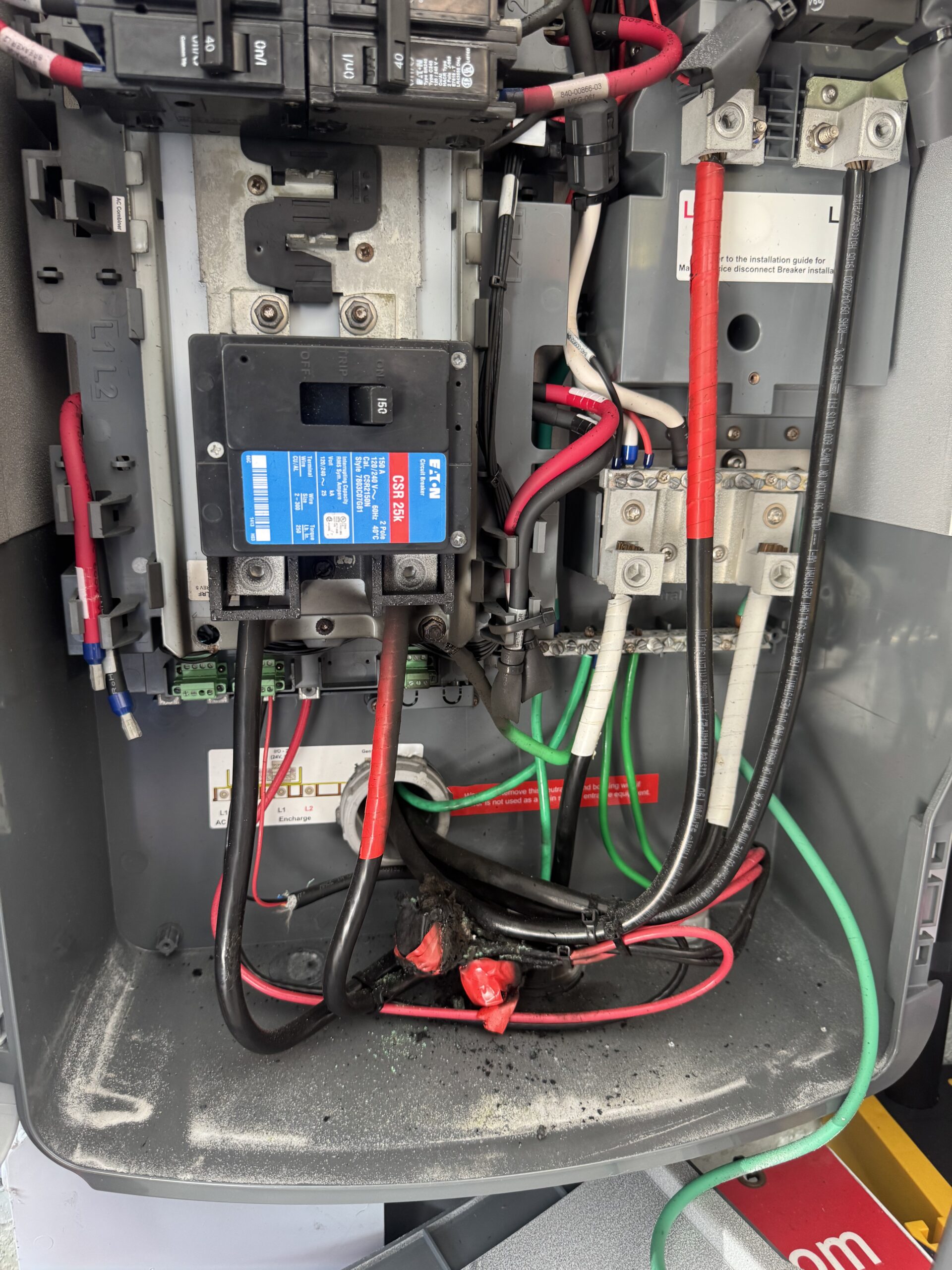
The homeowner called because their Enphase batteries were not working. Their original installer had gone out of business, which is usually a red flag. In this case, it was more like a warning label. They wanted the system brought back online. What we found inside the Enphase System Controller was a near-miss that could have ended with a garage full of smoke and a really bad day.
The Smoking Gun: Melted Splice Taps
Inside the System Controller, the battery conductors had been spliced using Polaris-style insulated taps. There is nothing wrong with that, and it’s perfectly normal and code compliant. But these connectors were melted and deformed, with visible heat damage and plastic residue around the splice area. That is not “a little warm.” That is “this connection has been cooking for a while.”
There was also fire/smoke damage to adjacent wires.
Here is the part that matters: the installers used the wrong size taps.
- The taps were rated for 3/0 to #6.
- The conductors installed were #8.
- #8 is too small for a connector that bottoms out at #6.
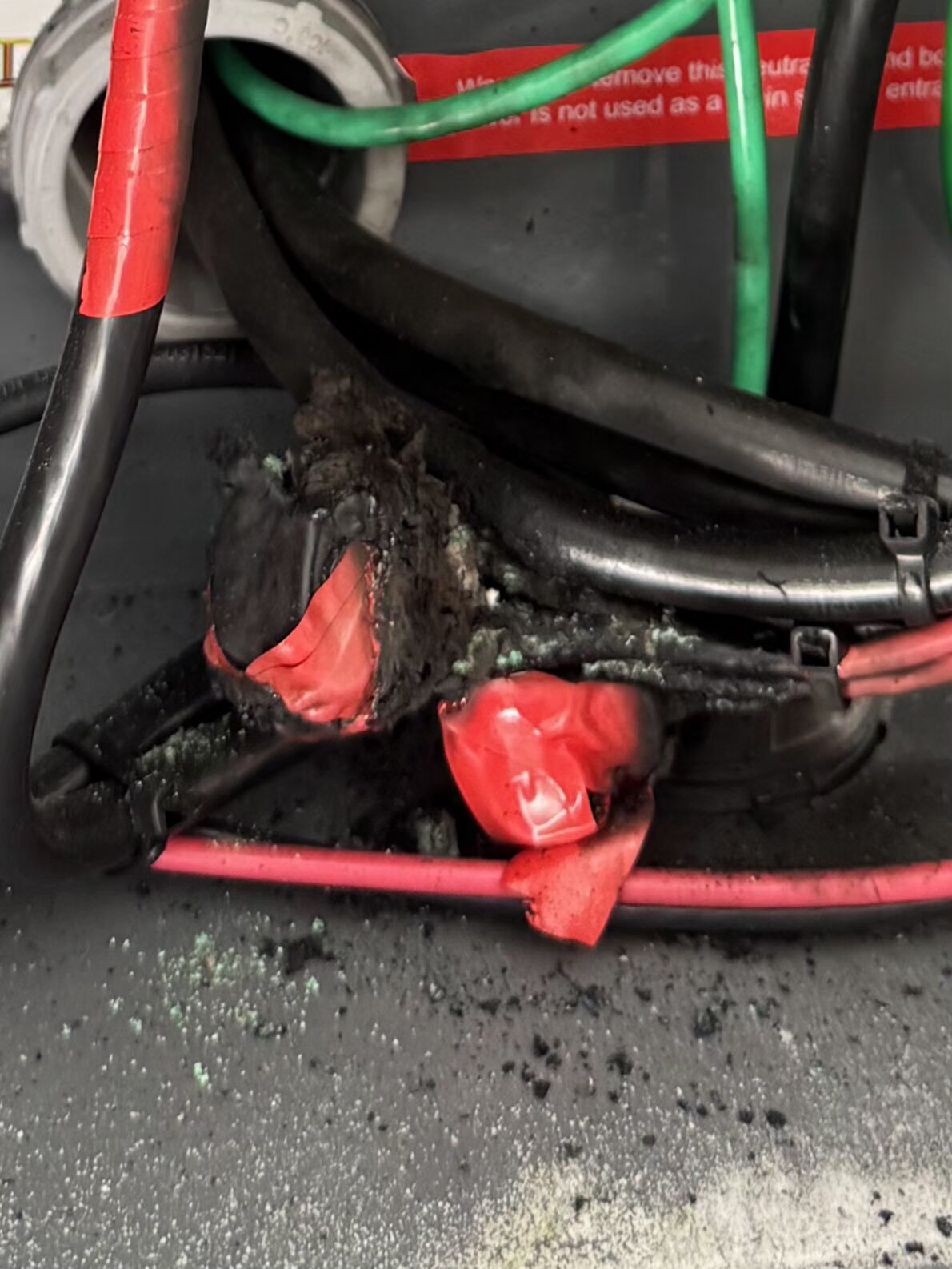
When you put a smaller conductor into a connector that is not listed for it, you do not get proper compression. You do not get proper surface contact. And you definitely do not get a connection that stays cool under load.
Why This Turns Into a Fire Hazard
Electrical heating at a bad connection is not magic. It is math.
A loose or improperly sized termination increases resistance at the connection point. Current flowing through resistance creates heat (I²R losses). The more load, the more heat. The more heat, the more things loosen, oxidize, and degrade. It is a feedback loop that ends with melted insulation, damaged equipment, or ignition if conditions line up.
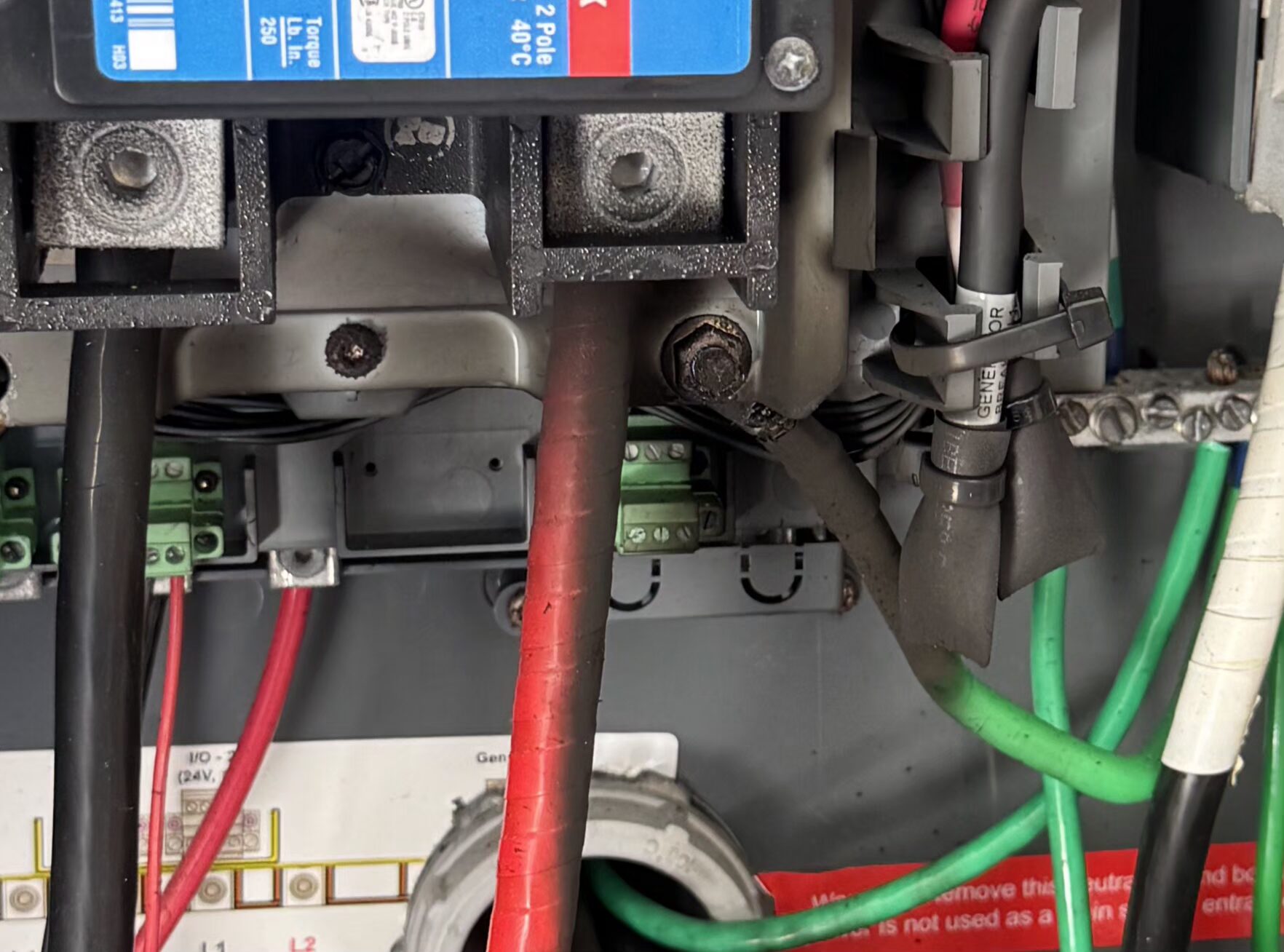
And since this was inside a packed enclosure with multiple conductors and components nearby, you get the “crowded room” problem: one failure starts bullying everything around it.
How Did the Homeowner Not Smell It?
I honestly do not know.
Melted plastic usually announces itself. But garages are big, doors are closed, people get used to “weird smells,” and battery systems often sit quietly until they are asked to do real work. If the system was faulting and not operating correctly, it may have been heating intermittently, not continuously. Either way, the lack of smoke is not proof of safety. It is proof they got lucky.
What We Did To Fix It
This is not a “tighten it and send it” situation. Heat damage means you treat the whole splice area as suspect.
- De-energized and verified the system was safe to work on.
- Removed the damaged taps and inspected the conductors for heat damage, deformation, and insulation compromise.
- Re-terminated using properly listed connectors that are rated for the actual conductor size (#8 in this case) and the application.
- Torqued every termination to manufacturer spec. Not “good and tight.” Actual torque.
- Cleaned up routing and strain relief so the splice is not being stressed or pulled.
- Functional testing to confirm normal battery operation and verify the fix under real load.
Once the correct parts were installed and everything was properly torqued, the battery system returned to normal operation. More importantly, the hot spot risk was removed.
The Bigger Lesson: Torque Specs Are Not “Suggestions”
Even if the connector size had been correct, improper torque alone can create the same failure mode. With modern energy storage systems, terminations matter more than ever because:
- Battery systems can move serious current.
- Connections are often inside tight enclosures with limited airflow.
- Failures can damage expensive equipment fast.
- Worst case, they become ignition sources.
If you take nothing else from this post, take this: “Listed parts + correct conductor range + correct torque” is the baseline. Not the deluxe package.
What You Should Do If Your Installer Disappeared
If your solar or battery installer went out of business, do not assume the system is safe just because it powered your house yesterday. A lot of the worst problems are the quiet ones.
If you have an Enphase battery system that is offline, throwing errors, or acting “weird,” get it checked by a licensed contractor who actually services what they install. We see a steady stream of orphaned systems, and the pattern is consistent: the shortcuts show up later.
If you are in Southwest Florida and want a professional diagnostic (not a sales pitch), contact us. We will tell you what is wrong, what is dangerous, and what is optional. In that order.
Safety note: Electrical enclosures and energy storage systems can be hazardous even when “off.” This article is educational, not DIY instructions. Hire qualified, licensed professionals.


