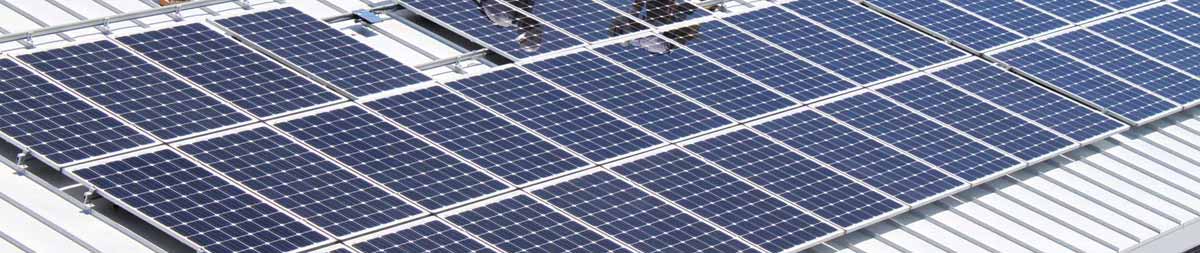
Solar electricity is what most people picture when they hear "solar panels." Photovoltaic panels on the roof, electricity flowing to your home, a lower utility bill every month. The concept hasn't changed. But a solar electricity system designed for a Southwest Florida home in 2026 looks nothing like what was being installed ten years ago. Panels are more efficient, inverter technology has advanced across every architecture, battery backup has gone from a niche add-on to a practical necessity for many homeowners, and FPL's net metering rules have shifted the math on how systems should be sized. If your last serious conversation about solar happened a few years ago, a lot has changed.
Florida Solar Design Group has been designing and installing residential solar electricity systems in Lee, Charlotte, and Collier Counties since 2015. This page explains how the technology works, what distinguishes a well-designed system from a mediocre one, and what to expect when you work with us.
What Solar Electricity Does for a Southwest Florida Home
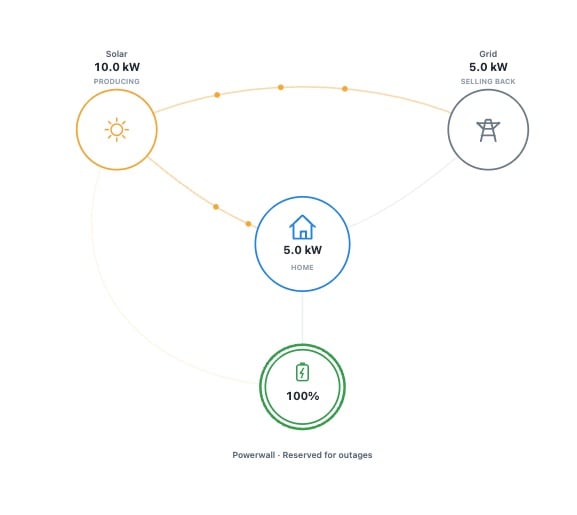
A residential solar electricity system converts sunlight into usable power. During daylight hours, your solar array produces electricity that your home uses directly, reducing or eliminating your draw from FPL or LCEC. Any surplus power you generate is exported to the utility grid, and your account receives a credit through net metering. After dark, or when cloud cover drops production below your consumption, the utility supplies the difference. The transitions are seamless. You do not flip switches or manage the source of your power.
Southwest Florida gets roughly 265 days of usable solar production per year. That puts this market among the highest-yield residential solar environments in the country. A properly designed system here will produce more energy per watt of installed capacity than a comparable system in most of the continental United States. Geography works in your favor.
The financial case is straightforward: your solar system generates electricity you would otherwise pay for. Over a 25-year system lifespan, that avoided cost adds up considerably. Florida also provides two meaningful financial advantages beyond energy savings. Solar equipment is exempt from Florida sales tax, including installation. And the added home value from a solar installation is excluded from property tax assessment under Florida law. You capture the equity benefit without a corresponding property tax increase. These are real, measurable advantages that apply in every county we serve.
How a Grid-Tied Solar Electricity System Works
The technology is more straightforward than most people expect. A grid-interactive solar electric system works in parallel with utility power, delivering solar electricity to your home and crediting surplus production to your account.
Step 1: Panels Convert Sunlight to DC Electricity
Solar photovoltaic panels produce direct current (DC) electricity when exposed to sunlight. Today's high-efficiency panels convert significantly more sunlight into usable power than panels from five or ten years ago. We size and model every system using production simulation software that accounts for your specific roof orientation, tilt angle, shading from trees or adjacent structures, and Fort Myers-area weather data. A system that looks good on paper but ignores local conditions will underperform. We model first.
Step 2: Inverters Convert DC to AC Power
Your home runs on alternating current (AC). Inverters handle the conversion from the DC electricity your panels produce. There are multiple inverter architectures used in residential solar today, and the right one depends on your roof layout, shading profile, whether battery backup is part of the design, and whether you are tied to the utility grid or fully off-grid. We are fluent in all of them. See the inverter and equipment brands we recommend below.
Step 3: Power Flows to Your Home and the Grid
Converted AC power feeds your home's electrical panel and powers everything connected to it. When your panels produce more than you're consuming, surplus electricity flows through your meter to FPL's grid and you receive a net metering credit. When production is insufficient, FPL or LCEC supplies the difference. This interchange happens automatically through your utility meter. You will not notice it happening.
Step 4: Monitoring Tracks Production in Real Time
Every system we install includes real-time monitoring you can access from your phone or computer. You can see system-level and panel-level production data, review historical output, and catch performance issues before they become significant problems. Monitoring is included in every FSDG installation.
Inverter and Equipment Brands We Recommend
We do not lock clients into one inverter brand. The market has matured enough that several platforms are genuinely excellent, and the right choice depends on your specific system design. What follows are the brands we actually specify and stand behind. You will not find us recommending brands we would not put on our own homes.
Tesla Powerwall 3
The Powerwall 3 is a hybrid solar inverter and battery system in one unit. If you are installing new solar panels and want battery backup from day one, Powerwall 3 is one of the most cost-effective ways to get both in a single package. It handles solar input, grid interaction, and battery storage with a clean app interface and strong monitoring. We have installed numerous Powerwall 3 systems in Southwest Florida and know the product well, including its charge rate limitations that some competing dealers do not disclose.
Enphase
Enphase builds a cohesive solar and battery ecosystem. Their microinverter platform is one option we install, and their IQ Battery 5P pairs tightly with Enphase solar systems. The integration is clean and the monitoring is detailed. Enphase is a strong choice for homeowners who want a single-vendor system with a well-supported app and a long track record in the industry. As with any platform, there are tradeoffs, and we will walk through them with you during the design process.
Sol-Ark
Sol-Ark makes hybrid inverter/chargers that are known for flexibility and battery compatibility. A Sol-Ark inverter can work with a wide range of lithium battery brands, which gives us more system design options when client needs do not fit neatly into a vertically integrated platform. Sol-Ark systems are a solid choice for clients who want a capable, professionally oriented inverter without being locked into a single-brand ecosystem.
EG4 FlexBoss and GridBoss
EG4's FlexBoss and GridBoss platforms are hybrid inverter/charger systems that have gained traction in the professional market for their performance and value. These are not consumer-grade products. They are designed for installation by qualified contractors and work well in systems where flexibility in battery selection or load sizing is a priority. We have deployed EG4 systems on projects where the platform's architecture suited the design better than alternatives.
MidNite Solar AIO
The MidNite AIO (All-In-One) is a modular inverter platform with a strong track record in off-grid and battery backup applications. MidNite has been building charge controllers and inverter components for professional installers for years, and the AIO reflects that depth of experience. It is particularly well-suited to complex off-grid designs where granular system control and modularity matter. We have active off-grid installs running MidNite AIO, including island properties in our service area.
Brands we do not install: SolarEdge (alarming inverter failure rates and poor customer support), Generac (entered the battery market through an acquisition and never earned traction with professional contractors), and consumer-grade portable power stations such as EcoFlow, Jackery, Bluetti, and similar products, which are not suitable for rooftop solar integration or whole-home backup. We don't offer Franklin Whole Home at this time because their market penetration in Florida is low, reducing serviceability.
Battery Backup Has Changed the Conversation
The old framing on battery storage was that it was expensive, uncommon, and only worth considering if you were going fully off-grid. That framing is no longer accurate in Southwest Florida, and it has not been accurate since Hurricane Ian.
Here is what a lot of homeowners discovered after Ian: a grid-tied solar system without batteries goes dark during a grid outage. This is not a flaw. It is a code-required safety behavior that prevents your system from back-feeding the utility grid while crews are working on lines. But the practical consequence is that homeowners with solar and no batteries sat in the dark alongside their neighbors with no solar at all. The panels were on the roof. The system was undamaged. And it produced nothing for days or weeks.
We now design a substantial portion of our solar projects with battery backup included from the start. Battery backup does add cost to a solar project. Whether that cost is right for your situation depends on your backup priorities, your load profile, and your history with outages in your neighborhood. We will work through those tradeoffs with you honestly.
If you want a deeper look at how home battery backup has evolved in this market, read this post on why whole-home battery backup has become the standard in Southwest Florida.
Why FSDG's Approach Is Different
There is no shortage of solar companies working in Southwest Florida. A number of them use door-to-door sales, subcontracted installation crews, and high-pressure closing tactics. We do not operate that way, and that difference shows up in the quality and longevity of every system we install.
Designed by a NABCEP Certified Professional
Jason Szumlanski holds the NABCEP Certified Photovoltaic Installation Professional (PVIP) credential, which is the highest professional certification available in the residential solar industry. It requires documented field experience, a rigorous proctored examination, and ongoing continuing education to maintain. Every system Florida Solar Design Group installs is designed by Jason personally. Not by a sales representative using a tablet, and not by a remote design team in another state.
Florida Licensed Electrical and Solar Contractor
FSDG holds a Florida Certified Solar Contractor license (CVC56956) and a Florida Certified Electrical Contractor license (EC13013208). Both are state-level certifications that authorize work throughout Florida. Many solar companies operating in this market are not licensed electrical contractors and must hire a subcontractor to perform or oversee electrical scope. We are not one of them.
We Manage Permitting In-House
Every residential solar installation in Florida requires permits from the local Authority Having Jurisdiction and interconnection approval from the utility. We manage the full permitting process in-house for Lee, Charlotte, and Collier Counties. We know the inspectors, we know the submittal requirements, and we know how each county's process works. When an inspector has a technical question on-site, I am available to answer it.
No Door-to-Door Sales
FSDG does not employ door-to-door sales representatives. Our clients contact us when they are ready to explore solar. They are not approached at their door with a limited-time offer and a signature line waiting.Co-Owner Dominick Zito handles sales consultations, meaning that you are dealing directly with the owner. That model self-selects for clients who have done some homework and approach the decision with realistic expectations. It makes for better projects and better outcomes. If you have questions about what door-to-door solar sales tactics look like in this market, this post is worth reading.
Serving Lee, Charlotte, and Collier Counties
We serve a defined geographic area and we know it well. Local permitting offices, local utility interconnection requirements, the deed restriction landscape in Cape Coral and Fort Myers master-planned communities, the roof types common in each county — this context makes a solar design accurate rather than generic. It is not something a national installer with a regional satellite office can replicate.
Fort Myers and Cape Coral
Fort Myers and Cape Coral form the core of our service area. Both cities have a high density of single-family homes with south-facing roof planes and low shading profiles, conditions that produce excellent solar output. Cape Coral's grid infrastructure sustained significant damage during Hurricane Ian, and battery backup interest there has been strong since. We have designed and installed systems throughout Cape Coral, from older neighborhoods near the bridges to newer construction in the northwest reaches of the city. We also serve Sanibel, Bonita Springs, and Estero in Lee County.
Naples and Collier County
Collier County includes a concentration of higher-end residential properties where whole-home backup is often as high a priority as solar production. We have designed systems in Naples, Marco Island, Ave Maria, and Immokalee. Collier County permitting and LCEC interconnection processes differ from Lee County's, and we handle both routinely.
Charlotte County and Punta Gorda
Charlotte County was among the most severely impacted communities during Hurricane Ian. Battery backup demand there remains elevated, and many homeowners are pairing solar with meaningful battery capacity for the first time. We serve Punta Gorda, Port Charlotte, Babcock Ranch, and surrounding communities.
Off-Grid and Island Properties
We also design and install systems for off-grid properties in Southwest Florida, including barrier island and waterfront locations not connected to the utility grid. Keewaydin Island, Cayo Costa, and similar properties are part of our regular project portfolio. Off-grid system design is significantly more complex than grid-tied design, requiring careful analysis of load profiles, battery capacity, and generator backup integration. We get out to these sites by boat. It is a specialty, not an afterthought.
Frequently Asked Questions
How long does a residential solar installation take from start to finish?
From signed contract to permission to operate (PTO) from FPL or LCEC, most residential solar projects take six to ten weeks. The majority of that time is permit processing and utility interconnection approval, not physical work. The installation itself typically takes one to five days depending on system size and complexity.
Will my solar system still work during a power outage?
A grid-tied solar system without battery backup will not produce power during a grid outage. This is a code-required safety requirement that prevents your system from back-feeding the utility grid while crews are working on lines. If grid outage protection is important to you — and in Southwest Florida, it is for a lot of homeowners — battery backup needs to be part of the system design from the beginning.
What happens to solar panels during a hurricane?
Solar panels are mounted with engineered racking systems designed to meet Florida wind load requirements. In the overwhelming majority of cases, panels survive hurricane-force winds without damage. The more common risk is debris impact. We have assessed many systems after major storms in this area, and properly permitted and installed systems have had very high survival rates. Unpermitted or improperly installed systems are a different story.
How does FPL net metering work in 2026?
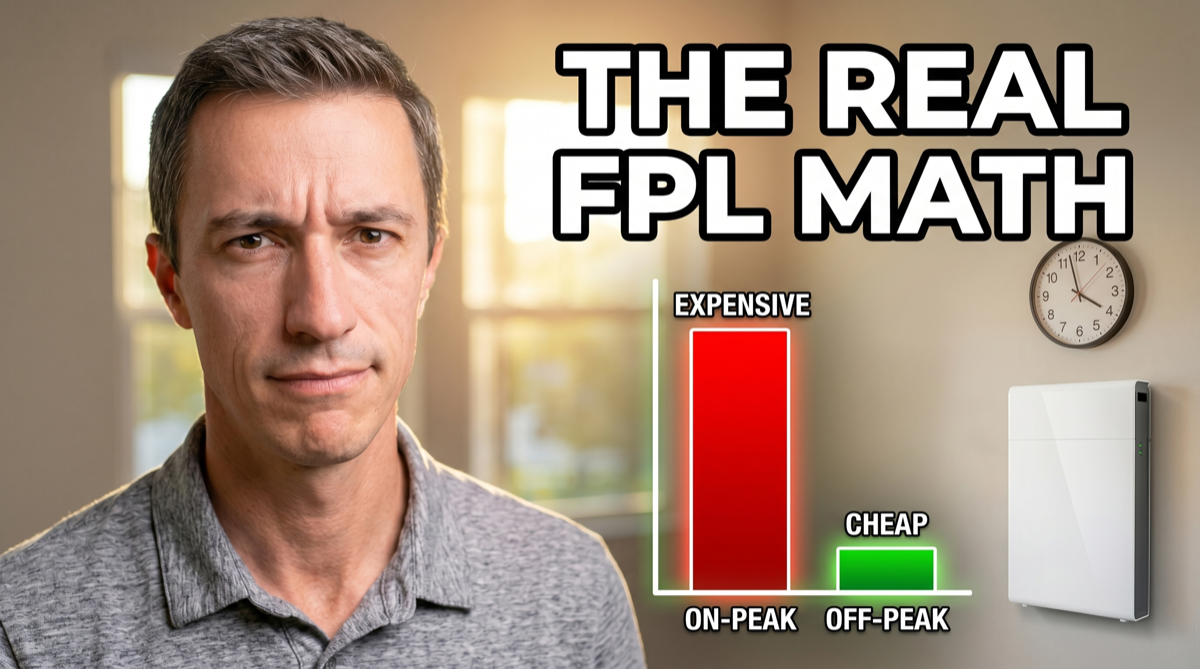
FPL credits your account for surplus energy you export to the grid on a monthly basis, true'd up annually each May. Surplus credits that exceed your annual consumption are zeroed out at that point. This means there is a ceiling on how much overproduction benefits you financially. We size systems to match or slightly exceed your annual consumption rather than over-building for maximum export. If you are an LCEC customer, the net metering structure differs and we will walk through those specifics during your design consultation.
What is the lifespan of a residential solar electricity system?
Solar panels carry 25-year performance warranties from the manufacturer and typically continue producing well beyond that. Inverter warranties vary by platform: microinverters and some hybrid inverters carry 25-year warranties, while others warrant 10 to 12 years. Battery systems have varying warranties and cycle life ratings depending on the platform. We discuss all of this during system design so you know exactly what you are buying.
Do you offer financing for solar projects?
Yes. We work with lending partners to offer solar financing. Our client base skews heavily toward cash purchases, but financing options are available for clients who prefer them. Visit our financing page for current details.
What does a solar system cost in Southwest Florida?
Residential solar pricing depends on system size, panel and inverter selection, roof complexity, and whether battery backup is included. We do not post a price list because a number without a design behind it is not useful information. We do systems small and large. You can start with a basic system and expand as your budget allows.
Related Services
Solar electricity is the foundation of energy independence, but it works best as part of a complete energy strategy. Florida Solar Design Group also designs and installs:
- Battery Backup Systems — Whole-home backup storage using Tesla Powerwall 3, Enphase, EG4, MidNite AIO, Sol-Ark, and Victron. Designed to pair with new solar installations or retrofit onto an existing system.
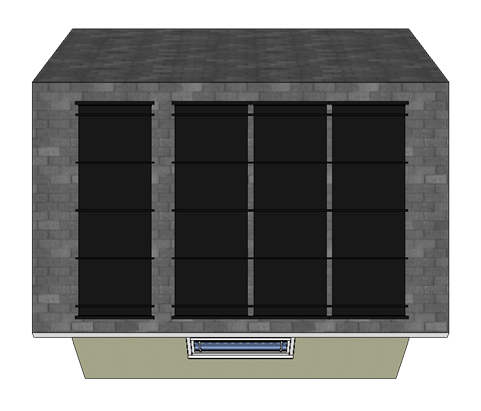
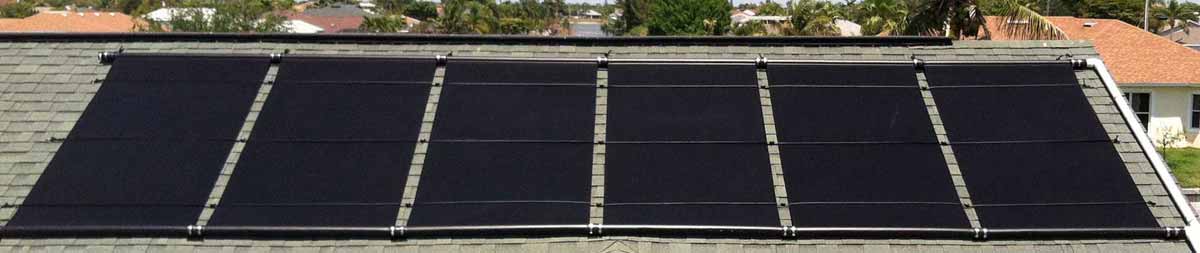
- Solar Hybrid Electric Pool Heating (SHEPH) — An advanced pool heating system that combines solar thermal and heat pump technology for year-round pool heating with minimal operating cost.
Talk to Us About Solar for Your Home
If you are in Lee, Charlotte, or Collier County and want to understand what a solar electricity system would realistically look like for your home, the first step is a conversation. I am not going to send a salesperson to your door. We will discuss your utility bills, your roof, your backup power priorities, and what a real system design would look like for your situation.
Call us at (239) 491-8010 or fill out the contact form on this page. We typically respond within one business day.