

EG4 FlexBoss + All-Weather Batteries: Off-Grid Has Officially Grown Up
I don’t post photos like this unless I’m genuinely proud of the install.
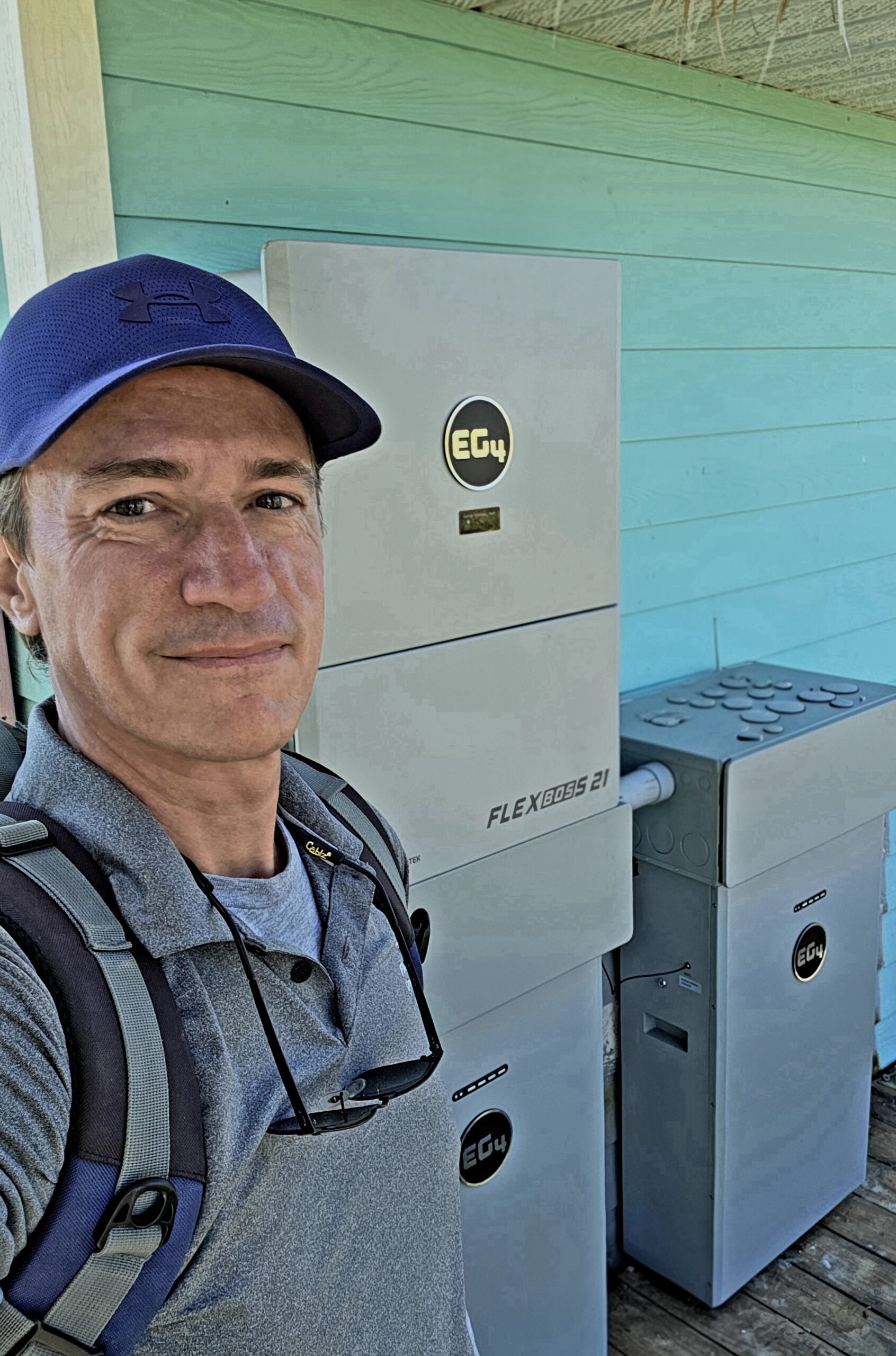
What you’re looking at is an EG4 FlexBoss 21 paired with EG4 all-weather batteries powering an entire off-grid home. No grid. No crutch. No “we’ll add a generator later and hope for the best.” This is a modern, integrated off-grid system designed from day one to run a real house.
And if you’ve been around this industry long enough, you know that’s not how off-grid used to look.
The Off-Grid Market Used to Be a Frankenstein
Ten years ago, a “serious” off-grid system looked something like this:
- Schneider inverter
- OutBack charge controllers
- Magnum inverter-charger
- Separate battery management
- External combiners
- Third-party monitoring (if you’re lucky)
- Miles of communication wiring
- And a service call every time something decided to stop playing nice with another component
That era is fading.
Not because those companies were “bad.” They built the off-grid world. But the architecture was modular by necessity, not by design elegance. You had to assemble your own ecosystem. And the more pieces you stacked together, the more failure points you created.
Today, the market has shifted.
Sol-Ark Opened the Door. EG4 Kicked It In.
Let’s give credit where it’s due.
Sol-Ark was the first all-in-one system that really made people pay attention. Integrated MPPTs. Integrated transfer switching. Hybrid capability. Cleaner installs. Fewer boxes. It was a big step forward.
But markets don’t stand still.
EG4 saw the writing on the wall and leaned into what installers and homeowners actually wanted:
- Higher PV input capability
- Cleaner, more serviceable architecture
- Fewer components
- Easy installation
- Batteries designed specifically to pair with their inverter platform
- Aggressive pricing
- Real availability
And the result is that products like the FlexBoss 21 are quietly taking market share.
Not because of marketing fluff.
Because they make sense.
Why the Market Is Moving Toward True AIO Architecture
The all-in-one (AIO) architecture isn’t just about fewer boxes on the wall. It’s about integration.
When your inverter, charge controllers, system logic, and battery communication are designed together, you eliminate:
- Compatibility guesswork
- Firmware mismatches
- CAN bus drama
- Frankenstein commissioning procedures
- Components fighting against each other
You also get:
- Cleaner installs
- Faster troubleshooting
- More predictable performance
- Better long-term support
For an off-grid home, predictability is everything. You don’t want a science experiment running your refrigerator.
Same-Brand Inverter and Battery: Why It Matters
This is where the industry is really shifting.
For years, inverters and charge controllers were “battery agnostic.” Installers mixed and matched brands constantly. That worked, sort of.
But when the inverter and battery are engineered together:
- Charge curves are optimized natively
- Communication protocols are purpose-built
- Firmware updates are coordinated
- Fault logic is consistent
- Warranty responsibility is clearer
That last one is huge.
Nobody wants a finger-pointing contest between inverter manufacturer and battery manufacturer when something goes sideways. One ecosystem. One logic tree. One support path.
That’s not marketing. That’s sanity.
Why Old Guard Players Are Losing Relevance
Schneider, Magnum, OutBack and others dominated off-grid for years.
But here’s the uncomfortable truth. They were built for an era where:
- Batteries were lead-acid
- Monitoring was optional
- Remote firmware updates weren’t expected
- Solar input voltages were lower
- Homes were smaller
Modern off-grid homes are different. They look more like grid-tied homes with no utility connection.
- Central air
- Induction cooking
- Well pumps
- Hot tubs
- Golf cart chargers
- All modern conveniences
That demands higher voltage PV strings, smarter battery integration, and software-driven control logic.
If you’re still using 2012 architecture in 2026, you’re going to fall behind.
The FlexBoss 21: Why It’s a Big Deal
The FlexBoss platform hits several pressure points in today’s market:
- High PV input voltage
- High output capability
- Integrated MPPTs
- Scalable battery pairing
- Clean install footprint
- Competitive pricing
- Expandable
It’s designed for real houses, not cabins.
And when paired with EG4’s all-weather batteries, you get a cohesive system that’s meant to work together. That matters.
Installed in One Day. On a Remote Island. By Boat.
Here’s the part that really tells you how much the industry has changed.
My team and I installed this entire system in one day. On a remote island. Everything came over by boat.
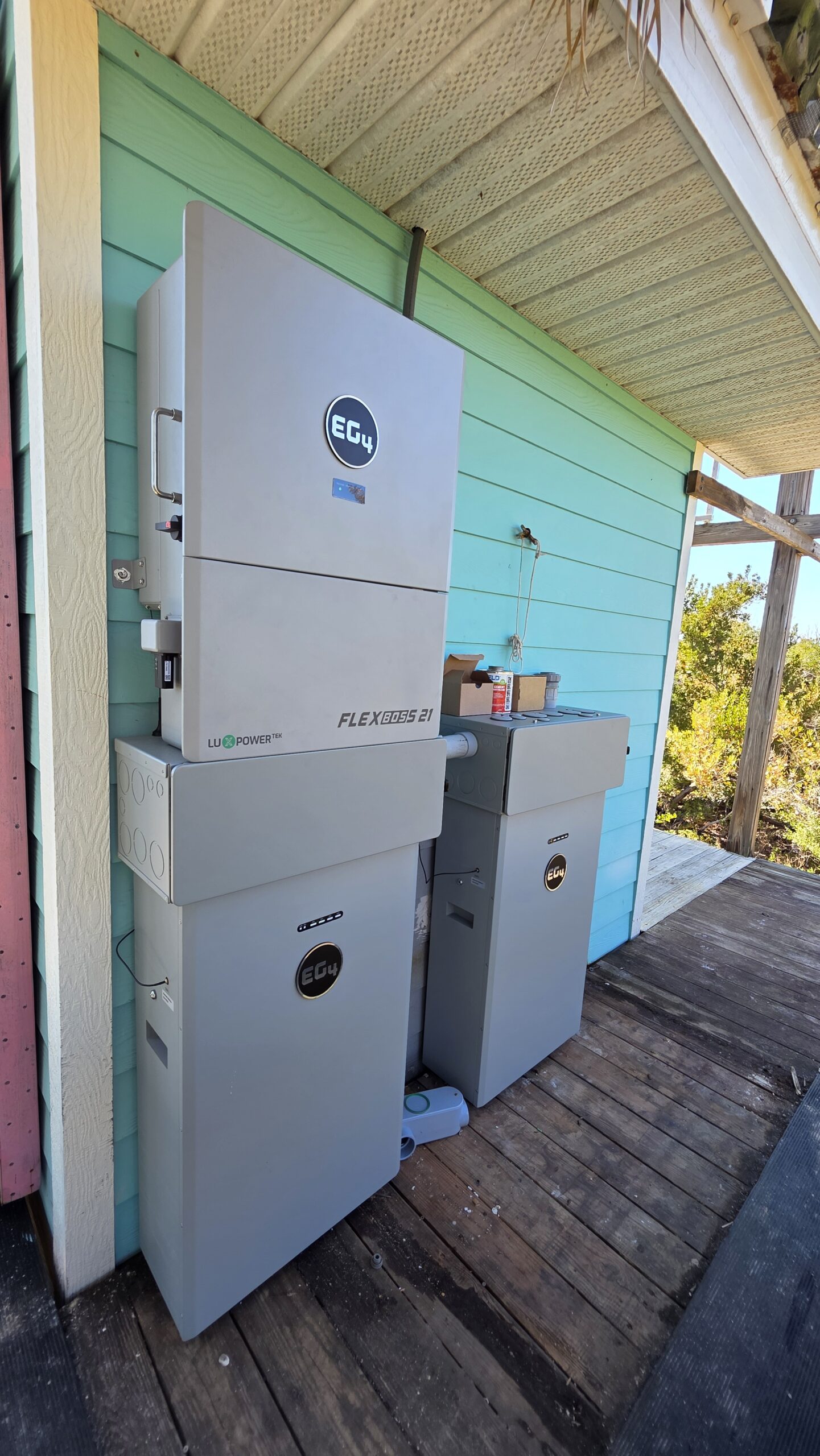
Now before someone chimes in with “yeah but there must have been weeks of prep,” let’s be clear. Yes, there is planning. Proper load calculations. String design. Conduit layout. Battery placement. Transport logistics. All of that happens before the first tool comes out.
But the difference is this.
With old-school modular off-grid systems, even after all that planning, install day looked like:
- Mount inverter
- Mount separate charge controllers
- Mount battery rack
- Mount disconnects
- Build combiner boxes
- Run custom wiring between components
- Run multiple communication cables
- Program each component individually
- Hope they all talk nicely
It was labor heavy. Wiring heavy. Commissioning heavy.
An installation like this with similar solar battery, and inverter performance would have taken a WHOLE WEEK! And then there would have been tinkering, tweaking, and tuning over weeks to get everything right.
This system is different. The equipment is designed to go together. The communication is native. The mounting points make sense. The layout is rational. Commissioning is unified.
That changes everything.
Labor is the most expensive line item in remote installs. When you’re transporting crew and materials by boat, every extra hour compounds cost. By simplifying architecture, EG4 isn’t just making cleaner installs. They’re cutting labor by a factor that simply wasn’t possible with cobbled-together systems of the past.
That translates to:
- Lower total project cost
- Fewer installer hours on site
- Fewer wiring errors
- Faster commissioning
- Faster service if needed
Off-grid used to be slow, complex, and expensive to execute well. Now it’s engineered to be efficient.
Let’s Be Honest About the Downsides
AIO systems aren’t perfect. Nothing is.
Here are the tradeoffs:
- Single point of failure: If the inverter goes down, a lot goes down with it. In modular systems, you could sometimes limp along.
- Less mix-and-match freedom: If you love building custom ecosystems with five brands and a lab notebook, AIO isn’t your playground.
- Vendor lock-in: When you buy into an ecosystem, you’re buying into that company’s future roadmap. Pick wisely.
Where the Industry Is Headed
Here’s my take.
- AIO systems will dominate off-grid within a few years.
- Same-brand inverter and battery ecosystems will become the norm.
- Modular component manufacturers will either modernize fast or shrink into niche markets.
- Legacy manufacturer equipment will be replaced as homeowners need upgrades or experience maintenance issues.
- Software and firmware will matter as much as hardware.
We are watching the consolidation of system architecture in real time. And installs like this are proof.
If you’re designing an off-grid system in 2026 and still thinking in 2010 terms, you’re going to overcomplicate it and overpay for it.
The game has changed. EG4 is one of the companies pushing that change hard.


