If you are researching microinverters, two names come up over and over again: Enphase and APsystems.
Enphase is the category leader. APsystems is the value challenger. Both convert DC power from your solar panels into usable AC power at the module level. Both provide panel-level monitoring. Both solve shading and mismatch issues far better than traditional string inverters.
But they are not the same product, and they are not aimed at the same buyer, especially in a solar market that no longer has the federal government quietly paying for premium hardware.
This comparison is written from the perspective of a contractor who actively manages over 1,000 solar systems in the field, the majority of which use Enphase equipment. For years, we were effectively an Enphase-only shop until more value options became available and battery storage flexibility became important. That history matters because it shapes how we evaluate alternatives today.
What has changed is primarily not the technology. What has changed is the economics.
Company Strength and Longevity
Enphase has been around longer and carries more weight in the residential solar industry. They pioneered modern microinverters, survived early reliability problems, and rebuilt their reputation by investing heavily in design, testing, and support. Today, they are the dominant microinverter manufacturer in North America and a financially strong public company.
That matters. Solar equipment is a 25-year decision. Company survival is not an abstract concern.
APsystems is younger but not new. They have been operating globally for more than a decade, with significant international deployment and growing U.S. market share. They are particularly strong in multi-module microinverter designs and have steadily expanded their product line.
Enphase still wins on brand trust and long-term confidence. APsystems is not a gamble, but it does not yet have the same depth of U.S. residential track record.
Technology Philosophy: One Panel vs Two
This is the most fundamental difference.
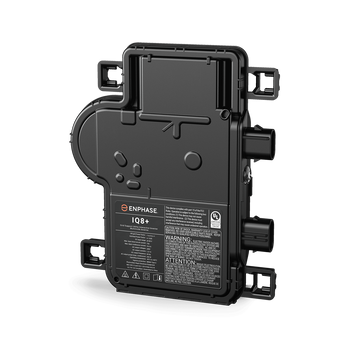
Enphase uses a one-to-one architecture. One microinverter per panel. Each panel operates independently. If one micro fails, you lose one panel until it is replaced.
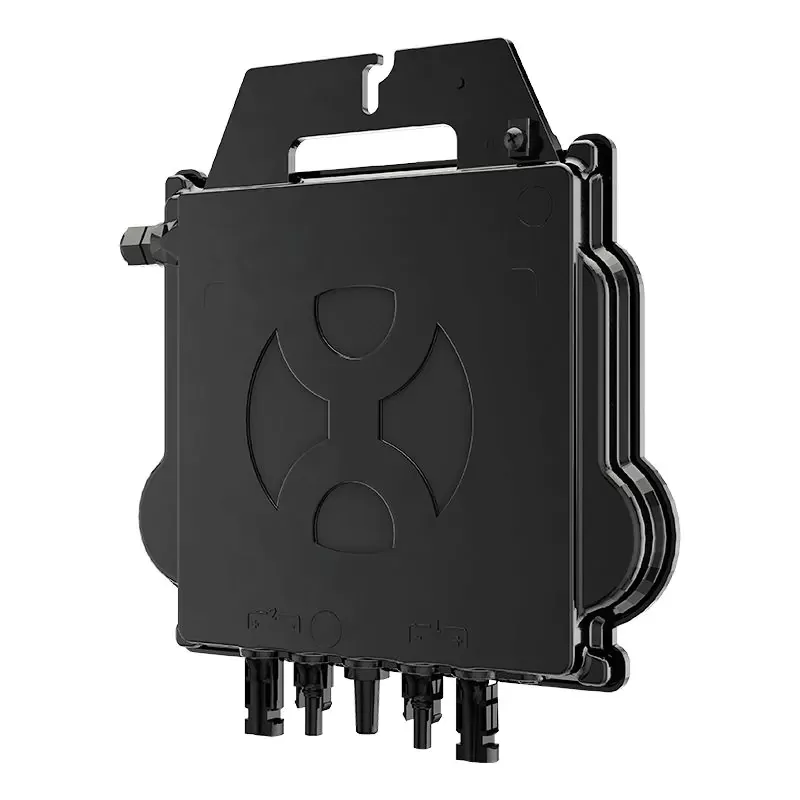
APsystems primarily uses a dual-module architecture. One microinverter serves two panels, with independent MPPT channels for each. Fewer inverters on the roof. Lower equipment cost.
Enphase prioritizes isolation and redundancy. APsystems prioritizes efficiency and cost reduction. Both approaches work. They simply optimize for different outcomes.
One interesting note is that Enphase tried a dual-panel microinverter design over a decade ago that was a total fiasco. The D380 had serious reliability issues and was ultimately abandoned. Over the years, Enphase went back to it’s 1-to-1 architecture and improved reliability dramatically.
Reliability: Theory vs Field Reality
This is where Enphase earned its reputation.
Modern Enphase microinverters have an exceptionally low observed failure rate in the field. Across the systems we manage, failures are rare and usually isolated to a single panel. When something does go wrong, the rest of the system keeps running, and the issue is easy to identify.
APsystems reliability has historically been more mixed, largely due to earlier generations of their products. Installers who worked with older models reported higher failure rates and more friction during warranty claims.
To their credit, APsystems has clearly worked to address this. Newer models are simplified internally, thermally improved, and now backed by longer warranties. Whether those improvements fully close the reliability gap is something only time will confirm.
Today, Enphase still sets the benchmark for long-term reliability. APsystems is improving, but still proving itself.
Warranty and Support: What Actually Matters
On paper, both manufacturers now advertise long warranties on current products.
In practice, the details matter more than the headline.
Enphase offers a long-established hardware warranty supported by a deep installer network and mature technical support organization. While Enphase does not provide a blanket long-term labor reimbursement program, their warranty process is predictable and generally smooth.
APsystems has extended warranties on newer products, which is a positive step. Historically, labor has not been included, and support experiences have varied depending on distributor and region.
A warranty is only as good as the company standing behind it, the installer servicing it, and the likelihood you will ever need to use it.
Enphase wins on predictability. APsystems wins on upfront cost.
Most importantly, over the last decade, almost everyone in the Southwest Florida marketplace sold and installed Enphase systems, gaining experience and understanding the service paradigm. Conversely, almost nobody offered APsystems, so the network of dealers you can turn to for service and support may be much smaller.
Monitoring and Energy Ecosystem
Enphase offers a fully integrated ecosystem including microinverters, battery storage, load control, consumption monitoring, and a polished homeowner app that ties everything together.
If battery backup is part of your long-term plan, Enphase’s ecosystem is a real advantage. Everything is designed to work together and live in a single interface.
APsystems focuses primarily on solar production. Monitoring is functional and improving, but it does not offer the same depth of energy visibility without additional hardware. However, they do offer whole-home energy monitoring at an extra cost.
For homeowners who value insight into how their home uses energy, Enphase clearly leads. The app is polished, often cited as the most homeowner-friendly solar app, while still offering a good depth of information. The installer insight from the Enlighten Manager app is unparalleled, allowing installers to dig in and diagnose issues remotely.
The Post–Tax Credit Reality: Why Value Matters Now
For years, the federal tax credit softened the cost of premium hardware. When the government effectively paid a portion of the upgrade, homeowners were encouraged to buy every bell and whistle available.
That era has ended.
In a post–tax credit world, every extra dollar spent on hardware has to justify itself on performance, reliability, or long-term value. Features for the sake of features no longer pencil out.
This is where value-oriented equipment like APsystems becomes relevant.
Believe it or not, but a microinverter now costs more than the solar panel that it is attached to. By cutting the number of microinverters in half, APsystems has a huge cost advantage. By reducing hardware costs while retaining panel-level optimization, APsystems enables homeowners to lower upfront costs, shorten payback timelines, and preserve microinverter benefits while accepting a calculated trade-off in brand depth and ecosystem polish.
That does not make Enphase bad. It makes Enphase premium.
While Enphase has always been the premium brand with all of the bells and whistles, you now pay for 100% of those upgrades rather than 70% when tax credits existed. Only you can decide whether those features are worth it.
Enphase vs APsystems: Quick Comparison Table
| Category | Enphase | APsystems |
|---|---|---|
| Architecture | One microinverter per panel | Typically one microinverter for two panels |
| Shading and complex roofs | Excellent panel-level optimization | Excellent panel-level optimization |
| Reliability track record | Best-in-class long-term field history, well beyond early failure lessons | Improving, but earlier generations had mixed history |
| Failure impact | If one fails, you lose one panel | If one fails, you may lose two panels until replaced |
| Support and service experience | Mature support network and predictable process, best in class customer support for both installers and homeowners | Varies by region and distributor, improving over time |
| Ecosystem and backup | Full suite includes battery storage and whole-home energy ecosystem | More focused on solar production, less unified ecosystem |
| Monitoring | Polished homeowner experience, deep visibility | Functional monitoring, generally less refined |
| Price positioning | Premium pricing | Value pricing, often meaningfully lower cost |
| Best fit homeowner | Wants top confidence, ecosystem, and batteries | Wants strong ROI and micro benefits without premium cost |
Which One Is Right for You
Choose Enphase if you want maximum long-term confidence, plan to add battery backup, value ecosystem integration, and are comfortable paying more for proven reliability.
Choose APsystems if you want microinverter performance without premium pricing, are focused on raw ROI in a tighter economic environment, and trust your installer to stand behind the system.
Both systems work. Both are legitimate. The difference is philosophy.
Enphase is about certainty. APsystems is about efficiency.
In a post–tax credit solar market, value engineering is not a compromise. It is responsible system design. We are confident in offering both brands while helping our clients understand the differences and tradeoffs that exist.