

Most people buying solar for the first time spend their energy comparing panel brands and asking about warranties. The decision that actually shapes your system’s long-term capability gets almost no attention. That decision is your inverter technology, and if battery backup matters to you now or in the future, you need to get this right before anything goes on the roof.
Existing solar owners with no batteries are stuck working around whatever technology was installed. You are not. You get to design the system from the ground up, which means you can optimize for battery backup from day one instead of retrofitting around it later. This post walks through the two main inverter approaches we use for new installations in Southwest Florida, how each one affects your battery options, and what the three best battery paths actually look like in practice.
The Decision Nobody Talks About: Your Inverter Technology
Every solar panel on your roof produces DC power. That power has to be converted to AC before your home can use it. The hardware that does that conversion is the inverter, and there are two meaningfully different approaches we use for residential systems in Lee, Charlotte, and Collier Counties.
The first is microinverters. A microinverter is a small device that mounts directly behind each panel and converts that panel’s DC output to AC right on the roof. Enphase is the dominant microinverter brand, and it is the only one we install. Every panel operates independently. One panel with a shading problem or a hardware issue does not drag down the rest of the array. You get panel-level production monitoring through the Enphase Enlighten app, which is genuinely useful for identifying problems and verifying system performance.
The second approach is a string inverter paired with module-level power electronics, or MLPE. In this configuration, a single inverter handles the DC-to-AC conversion for the entire system. The MLPE devices, either AP Systems units or Tigo optimizers depending on the application, attach to each panel and handle rapid shutdown compliance and some level of panel-level optimization. The conversion all happens at a single box, typically mounted on your garage wall, rather than distributed across the roof.
Both approaches satisfy Florida’s rapid shutdown requirements under NEC 690.12. This is a code requirement, not a brand preference, and both technologies comply. If someone tries to sell you on a system that uses neither microinverters nor MLPE optimizers for a new residential installation, ask hard questions about rapid shutdown compliance before you sign anything.
Microinverters: What You Get and What You Give Up
If you are new to microinverters, this two-minute animated explainer shows how the whole system works, from the panels on your roof to your outlets.
The case for Enphase microinverters is straightforward. No single point of failure. Panel-level monitoring that tells you exactly which panel is underperforming and by how much. AC output from the roof, which simplifies some installation scenarios. A mature platform that has been refined over more than a decade in the field.
Shading tolerance is the other argument people make for microinverters, and it is partially true. If your roof has a chimney, a dormer, or a nearby tree that shades part of the array during peak hours, microinverters limit how much that shading penalty spreads across the system. Each panel works independently. A heavily shaded panel drags down its own output, not your neighbor panel’s output.
To be fair, modern string inverters with MLPE optimizers also offer panel-level optimization and meaningful shading mitigation. The gap between the two approaches has narrowed. Microinverters still have a real advantage in systems with complex shading patterns across multiple roof planes, but on a clean south-facing roof with no shading issues, the practical difference in production output is small.
The honest trade-off with microinverters is cost and complexity on the roof. More hardware per panel means more potential failure points over a 25-year system life, and servicing a failed microinverter requires roof access. Microinverters are significantly more expensive. String inverter components that fail are accessible at ground level. That is worth knowing before you decide.
String Inverters with AP Systems or Tigo MLPE: The Other Path
A string inverter with MLPE is not a compromise. It is a legitimate architecture with real advantages, particularly for larger systems and for buyers who want maximum battery flexibility at lower overall system cost.
AP Systems makes AC module-level devices that function similarly to microinverters but with a different topology. Tigo optimizers are DC optimizers that maximize each panel’s output and provide rapid shutdown capability while leaving the primary inversion to a central string inverter. Both satisfy the code requirements. Both give you panel-level rapid shutdown. The level of production optimization differs between the two, and we select between them based on the specifics of the installation.
The string inverter approach generally costs less per watt of installed capacity than a full microinverter system. On a larger home with 30 or 40 panels, that difference is real money. The inverter hardware sits in your garage rather than distributed across the roof, which makes maintenance and eventual replacement more straightforward. And as you will see in the battery section below, the string inverter path opens up the full battery menu without any ecosystem constraints.
The monitoring story is slightly less granular than Enphase’s Enlighten platform, though both AP Systems and Tigo provide panel-level visibility when using optimizers, but we don’t recommend them. If you want panel-level monitoring, stick with microinverters. If you are the type of owner who will check your production data weekly and wants to know exactly what panel 14 produced on a partly cloudy Tuesday, Enphase’s monitoring platform is still the best in the industry. If you want system-level visibility with problem alerts, both paths deliver that.
How Your Inverter Choice Shapes the Battery Menu
Here is where the inverter decision stops being abstract and starts having real financial consequences.
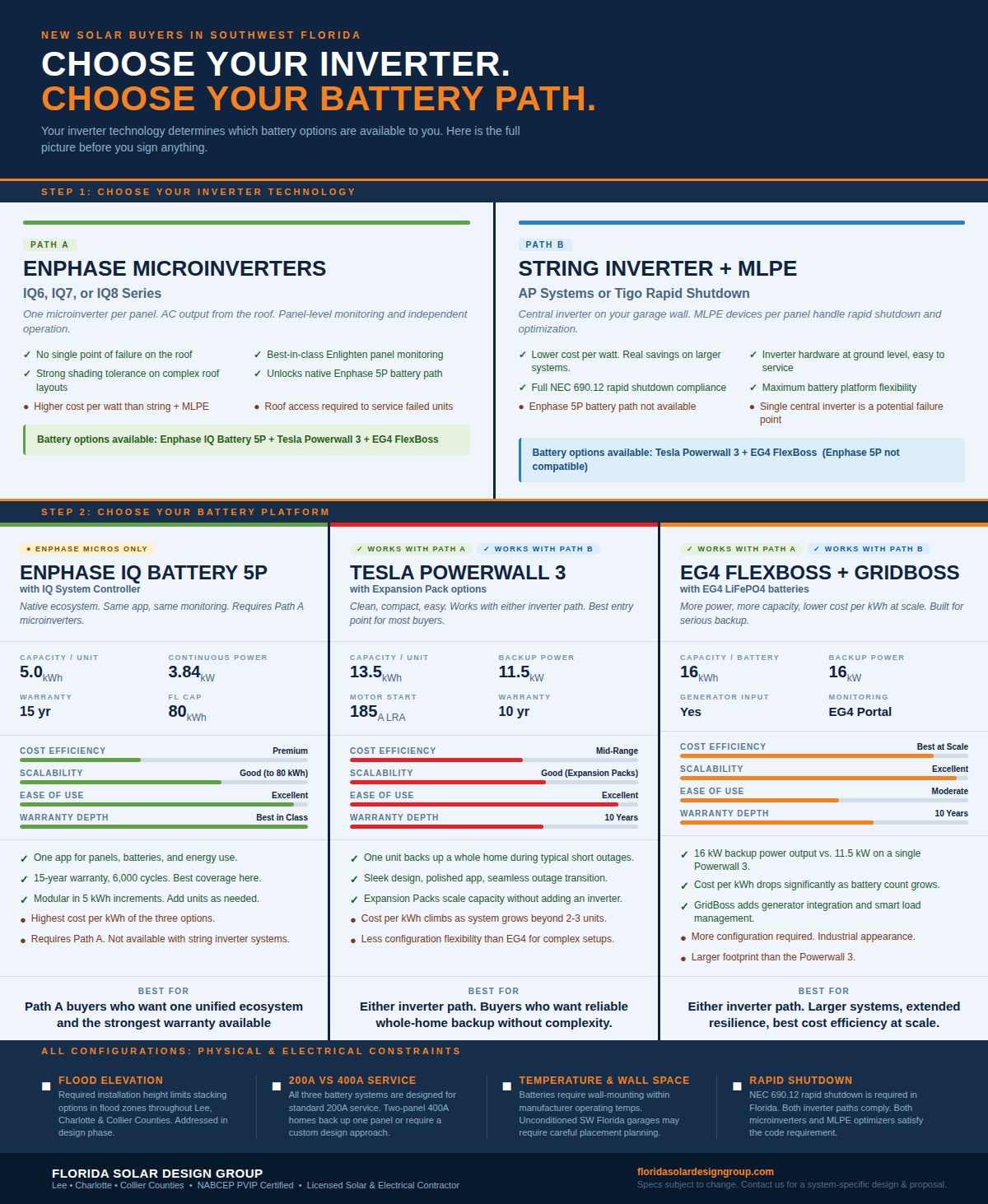
The Enphase IQ Battery 5P is a native integration product. It is designed specifically to work within the Enphase ecosystem alongside IQ series microinverters and the IQ System Controller. If you choose Enphase microinverters, all three battery options covered below are available to you. If you choose a string inverter with AP Systems or Tigo MLPE, the Enphase 5P is off the table. You are working with the Powerwall 3 or EG4, if you follow our current advice, both of which are excellent products, but you lose one option.
This matters in both directions. If you are committed to the Enphase 5P battery path because of the ecosystem integration and the 15-year warranty, you need to choose Enphase microinverters. If you are prioritizing battery capacity at the best cost per kilowatt-hour and planning to scale a serious system, you may be better served by a string inverter with MLPE and a direct path to EG4. Knowing this before you sign the contract is the entire point of this post. See how we approach battery backup design across Southwest Florida.
Battery Option 1: Enphase IQ Battery 5P (Enphase Microinverter Systems Only)
 For new buyers who choose Enphase IQ series microinverters, the 5P is the cleanest battery integration available anywhere. One app, one ecosystem, one monitoring platform for your panels, your batteries, and your energy usage. Nothing to reconcile, nothing to cross-configure. If you open the Enlighten app, everything is there.
The 5P carries a 15-year warranty backed by 6,000 cycles. That is the strongest coverage of the three options covered here, and it matters in Southwest Florida where battery systems cycle aggressively during storm season. The 5.0 kWh capacity per unit is modular. You can start with two and add more as your budget and needs evolve, with each unit adding 3.84 kW of continuous backup power to the system.
We specifically recommend the 5P over the IQ Battery 10C. The 10C is a first-generation product still working through firmware development, and FPL has not approved the meter collar installation that is central to the 10C’s design. The 5P has years of real-world field data. Read our full breakdown of why we recommend the 5P over the 10C in Southwest Florida.
The trade-off is cost. The 5P is the most expensive path per kilowatt-hour of the three options. You are paying for integration, warranty depth, and the Enphase platform. That is a legitimate value proposition. It is not the right answer for every buyer, but for an Enphase microinverter owner who wants everything managed in one place, it is hard to argue against.
Battery Option 2: Tesla Powerwall 3 (Works with Either Inverter Path)
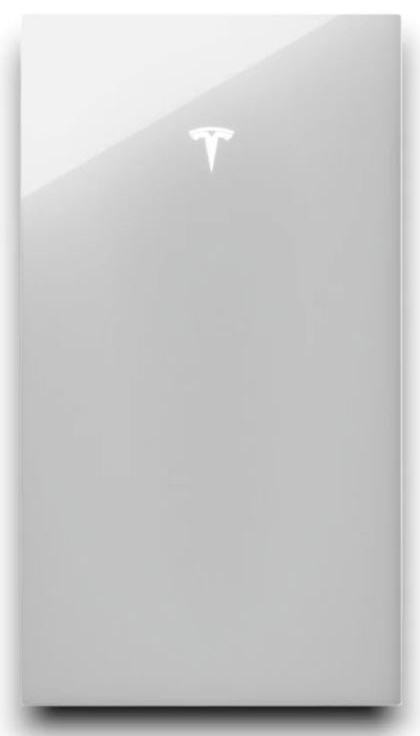 The Powerwall 3 is the most direct entry point into battery backup regardless of which inverter technology you choose. It integrates with Enphase microinverter systems and with string inverter systems equally well. For a new buyer who is not sure how much battery storage they want yet, a single Powerwall 3 is often the right starting point.
One unit delivers 13.5 kWh of storage and 11.5 kW of continuous backup power. That is enough to cover a whole home during the kind of short outages Southwest Florida sees most often. Two or three units changes the picture considerably. A two-unit system handles limited air conditioning. A three-unit system gets you through a multi-day event with meaningful comfort. Powerwall Expansion packs add capacity without requiring another inverter, keeping the footprint and cost of scaling manageable.
The Powerwall 3’s design is clean and its app is polished. The transition from grid power to battery backup is seamless during an outage. For a buyer who wants reliable whole-home backup without a steep configuration learning curve, it is the lowest-friction option in this lineup.
The cost per kilowatt-hour climbs as you add units, which is where EG4 starts pulling ahead for larger systems. If you are planning from the start to build a system sized for genuine multi-day resilience, run the numbers on EG4 before committing to the Powerwall at scale. See how battery backup systems are sized for Southwest Florida homes.
Battery Option 3: EG4 FlexBoss with GridBoss (Works with Either Inverter Path)
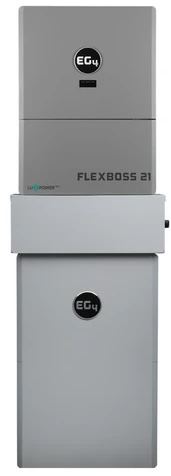 The EG4 FlexBoss platform works with both inverter approaches and is the right choice when capacity, cost at scale, or system configurability are the driving factors.
A single FlexBoss delivers 16 kW of backup power compared to 11.5 kW from a single Powerwall 3. Each EG4 WallMount battery adds 16 kWh of storage. The cost per kilowatt-hour drops meaningfully as you stack additional batteries, which is where EG4 creates real separation from the competition. A four-battery EG4 system is significantly more affordable per kilowatt-hour than four Powerwalls, and the gap widens as the system grows.
Paired with the GridBoss, the FlexBoss gains generator integration, smart load management, and the kind of configuration flexibility that matters for homes with non-standard electrical setups or high backup power demands. The GridBoss is what elevates EG4 from capable hardware to a fully managed energy system. If you have a generator and want it to work intelligently with solar and batteries rather than as a separate manual backup, this is the platform that handles it cleanly.
The trade-off is complexity and aesthetics. The EG4 system requires more configuration than a Powerwall 3 and presents a more industrial appearance on the wall. For a buyer building a serious system from the ground up with scalability as a priority, those are acceptable trade-offs. For someone who wants a single compact unit that looks good on the garage wall and requires minimal setup, the Powerwall wins that comparison. EG4 Electronics publishes full product documentation for buyers who want to review specs before a consultation.
Physical and Electrical Constraints Still Apply
The same installation constraints that affect existing solar owners affect new buyers. In some ways, they matter more at the design stage, because making the right decisions upfront avoids expensive changes later.
Flood elevation requirements in Lee, Charlotte, and Collier Counties restrict how high batteries can be mounted in many homes. Depending on your base flood elevation, this can limit stacking configurations or dictate which wall the battery system lands on. We work through this in the design phase, not at the installation stage.
Standard 200-amp electrical service is the baseline all three battery systems are designed for. If your home has 400-amp service with two panels, full backup of both panels is not always practical or cost-effective. The more common approach is consolidating critical loads on one backed-up panel. We have design approaches that extend coverage more broadly across a 400-amp service for buyers who need a more complete solution.
Temperature matters more than most buyers realize in Southwest Florida. Battery operating temperature ranges require that the installation location stay within manufacturer specifications. Unconditioned garages in August can push against those limits depending on the product and placement. This is one of the factors we evaluate during a site assessment before finalizing the battery platform recommendation.
The Bottom Line
New solar buyers in Southwest Florida have a decision to make that most installers will not walk you through carefully: your inverter technology choice shapes your battery menu, your long-term costs, and your upgrade path. It is worth understanding before you commit.
Choose Enphase IQ series microinverters if you want native integration with the IQ Battery 5P, the strongest warranty in the battery space, and a single unified monitoring platform for everything. Accept the premium cost and the higher hardware density on the roof as the trade-offs.
Choose a string inverter with AP Systems or Tigo MLPE if you want lower system cost, accessible ground-level inverter hardware, and the full flexibility of the Powerwall 3 or EG4 FlexBoss battery paths without ecosystem constraints.
Either way, both the Powerwall 3 and EG4 FlexBoss with GridBoss are available to you, and both are strong products at different points in the cost and capacity spectrum. The right answer depends on your budget, your backup goals, your electrical service, and the physical constraints of your specific property. We design and install all three battery platforms across Southwest Florida and can walk through the specifics of your situation before you make any commitments. Contact us for a solar and battery design consultation.


