I’m writing this from Vermont, where my wife and I like to vacation frequently. Two things often jump out at me when I’m up here.

First, there is a surprising amount of solar up here. Not token systems. Real, well-designed residential and commercial arrays, many of them mounted on standing seam metal roofs.
Second, it’s winter. Specifically, it’s Winter Storm Fern right now (we’re hunkered down in our B&B). Snow is coming down hard, roofs are fully loaded, and the snow retention hardware is doing exactly what it’s supposed to do. I’m watching it in real time.
That’s what got me thinking about something most Florida homeowners never consider: those small snow guards on metal roofs are not just winter accessories. Mechanically, they were the early proof that you could attach real hardware to a standing seam without punching holes in the roof.
That idea is the backbone of modern standing seam solar mounting.
And in Florida, where we trade snow load for hurricane uplift, salt air, and brutal thermal cycling, that evolution matters a lot.
Standing Seam 101: Why the Seam Became the Mounting Point
Standing seam metal roofing gives you a raised rib that is consistent along the roof, strong enough to transfer loads when used correctly, and perfectly positioned so you can clamp to it without penetrations.
Snow retention manufacturers exploited that first. They needed a way to keep a sheet of snow from sliding off a roof like a refrigerator being pushed down a ramp. So they built seam-mounted solutions, tested them, and refined the clamping geometry.
Solar took the same concept and turned it into a full ecosystem.
The Evolution: From “Stop Snow” to “Carry Uplift”
The basic engineering problem is the same in both worlds.
You are transferring load through a clamp into the roof panel system without damaging the panel or creating a leak path.
What changed is the dominant load case.
Up north, it’s snow load and sliding drag forces. In Florida, it’s uplift, vibration, storm gusts, and corrosion exposure.
The origin story is snow. The modern demand is storm survivability and repeatability.
A Quick Nod to Snow Retention and Solar Up North
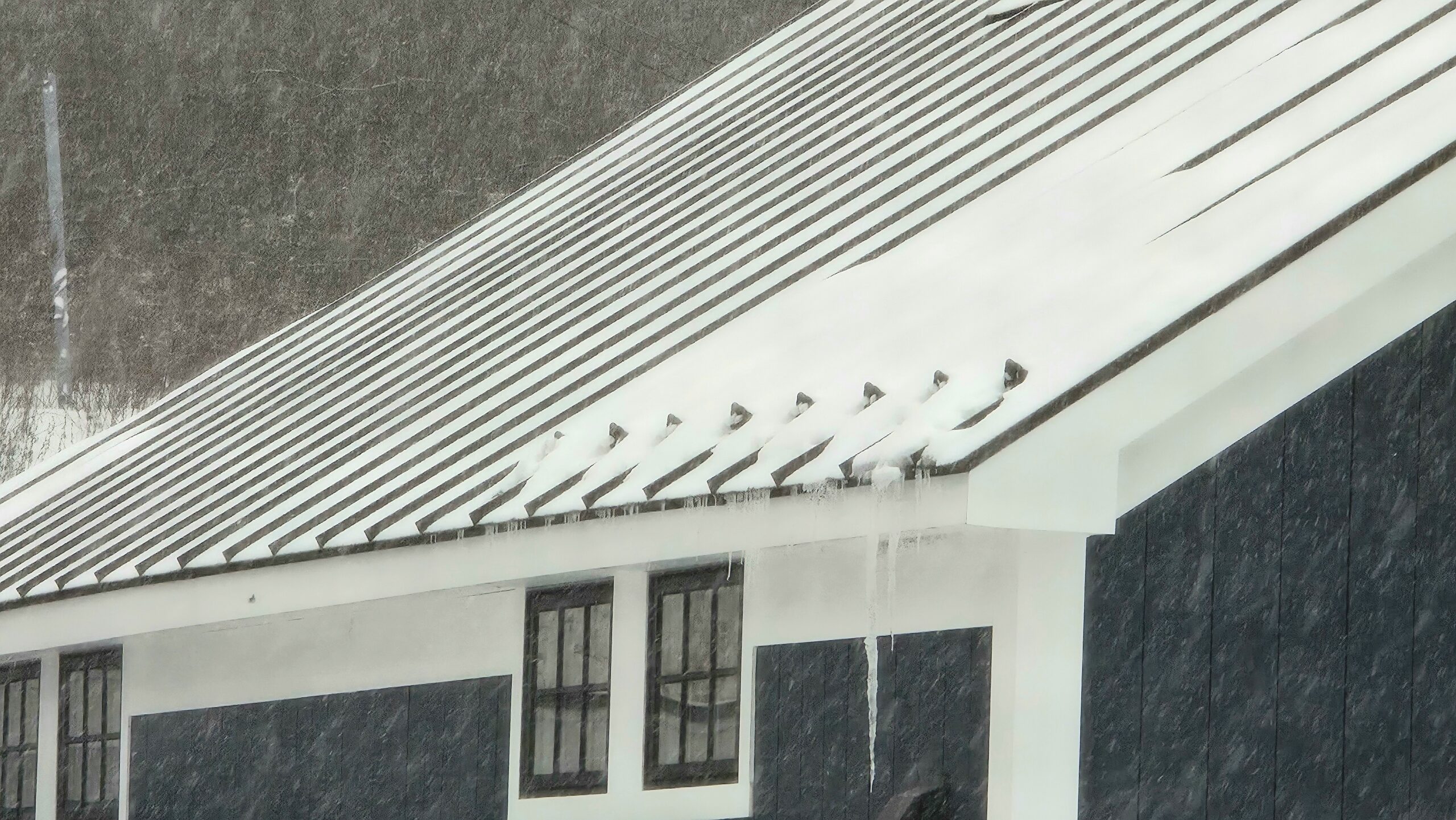
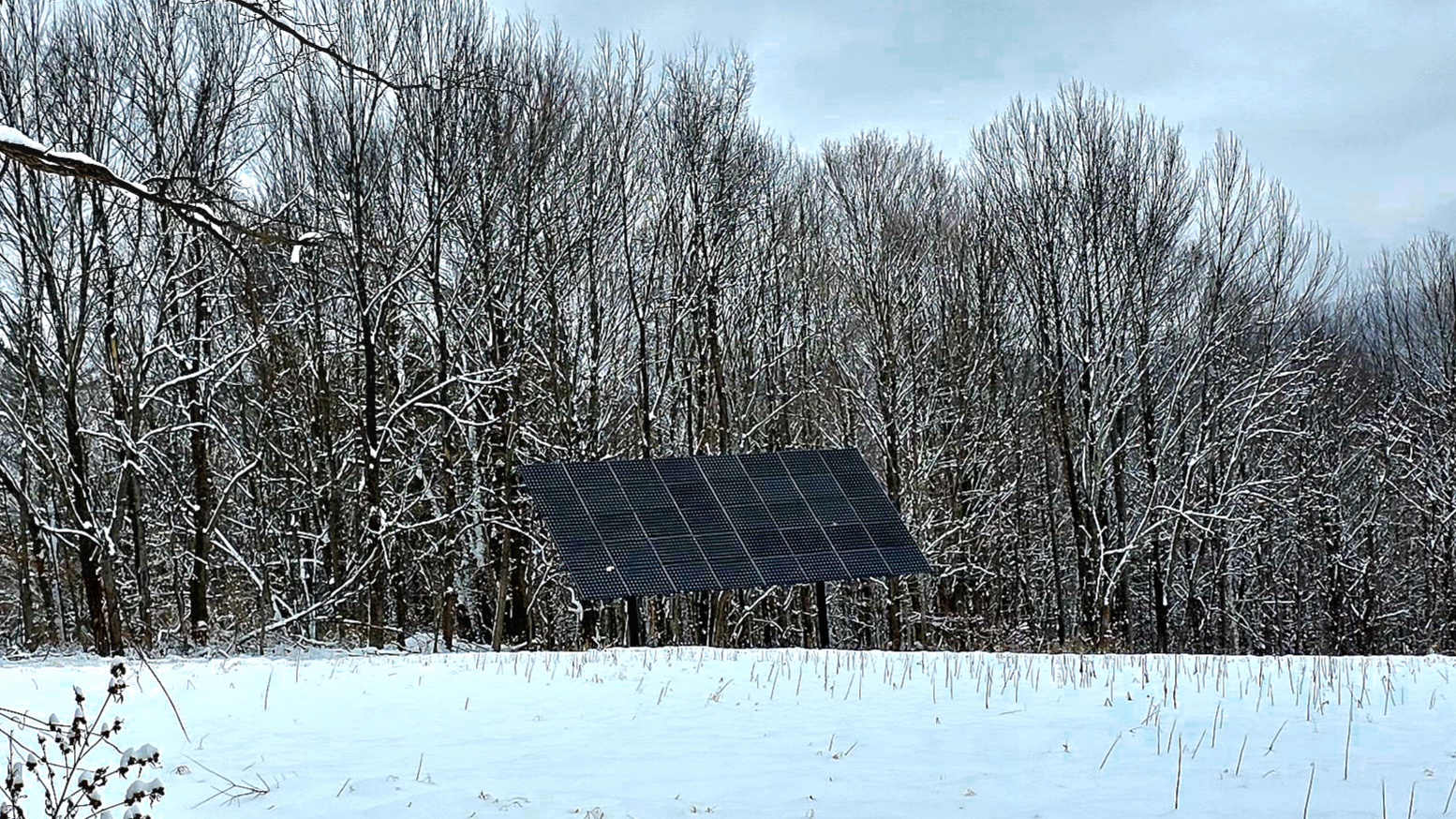
I have quite a few colleagues in Vermont who I regularly converse with online. I reached out to learn a bit about what matters up there. Solar panels change how snow behaves on a roof. They alter melt patterns, create shelves, and can concentrate release zones. Ignoring snow retention when adding solar in snow country is how you end up with larger, later, more destructive releases.
That’s why snow guards and snow rails are still very much alive when solar panels are added to a roof. The technology didn’t disappear. It matured and adapted.
Now back to Florida, where roofs don’t avalanche snow. They try to fly.
Florida Reality: Why Standing Seam Solar Mounting Still Matters
Standing seam metal roofs are not the majority of residential roofing in Southwest Florida, but they show up consistently on coastal homes, modern architectural builds, higher-end remodels, and commercial projects.
When a homeowner has standing seam, the solar conversation changes. The roof can outlast the modules, and non-penetrating attachment can significantly reduce leak risk and preserve roof warranties.
That only works if the attachment hardware matches the seam and the system is engineered correctly.
Universal vs Profile-Matched Standing Seam Clamps
This is where mistakes happen.
Some clamps are designed to work across a range of seam profiles within defined limits. These can be effective, but only when seam geometry, panel gauge, and manufacturer constraints are respected.
Other clamps are designed around specific seam families. Less universal, more precise. In high uplift zones, this is often where engineering confidence lives.
Picking the right clamp for the roof is critically important. The IronRidge Lynx, which I really like, is suitable for most roofs with seam profiles at least an inch high. We lean toward S-5 clamps on roofs with shorter snaplok seams and more uncommon profiles.
How Load Testing Actually Works
A standing seam clamp is not just a block of aluminum with set screws. It is an engineered interface with published test data behind it.
Reputable manufacturers test for uplift loads and drag loads. Uplift simulates wind forces pulling away from the roof. Shear simulates forces parallel to the seam, whether from sliding snow or cumulative thermal movement.
This testing is typically performed in third-party accredited labs and published so engineers and inspectors can evaluate real numbers instead of guesses.
Standing Seam Solar Mount Manufacturers You’ll Actually See
S-5! is the category-defining player. They’ve been developing seam clamps and roof attachment hardware since the early 1990s, supporting both snow retention and solar. Their clamps are widely referenced because they publish extensive compatibility and load data.
IronRidge Lynx is IronRidge’s non-penetrating standing seam attachment. The technology is licensed from S-5! and integrates directly into the IronRidge rail ecosystem, which matters for engineers and inspectors who like continuity. Their engineering is solid and standardized for a wide variety of seam types.
SunModo offers a standing seam clamp that can be used rail-less or with traditional rails. Some versions are designed to be broadly compatible within defined seam ranges, while others are intended for tighter profile control.
AceClamp approaches seam attachment differently, using a patented clamping mechanism rather than traditional set screws. They are active in both snow retention and solar attachment, and their products are designed to avoid roof surface damage when installed correctly.
Roof Tech is often mentioned in these conversations, but it’s worth clarifying. Roof Tech is a well-known solar mounting manufacturer for conventional roof types. In the standing seam clamp context, the name often comes up because S-5! hardware is distributed and referenced internationally through RoofTech channels, particularly in Europe.
Common Standing Seam Solar Mount Designs
Most systems fall into a few mechanical families.
Set-screw seam clamps paired with traditional rails are common and adaptable. Mini-rail and rail-less systems reduce material and simplify installs but still require disciplined engineering. Profile-specific clamps prioritize precision and load predictability. Alternate locking mechanisms offer different approaches to clamping force and surface protection.
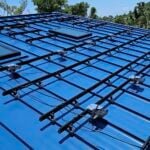
The traditional rail-based method is, in my opinion, the best, especially for serviceability in a world where module-level power electronics are required on the roof.
There is no doubt that the low-profile PV-KIT mounts from S-5 produce a sleek-looking system, but serviceability can suffer, and careful attention is required for alignment, expansion/contraction. What you save in material cost for rails is lost in labor for installation and warranty provisions.
The Florida Takeaway
Snow guards may look simple, but they proved something early. The seam can be a structural attachment point. Non-penetrating mounting can be repeatable. Loads can be tested, published, and trusted.
That thinking is exactly what we want when mounting solar on standing seam roofs in Florida. We just swap snow load for wind load and corrosion exposure.
Standing seam solar done right is not experimental. It is the result of decades of evolution that started with one simple problem: how do we attach to this roof without compromising it.