

Most homeowners with battery systems eventually ask the same question:
“Why isn’t my battery being used every day?”
Or more directly:
“Why did I buy a battery if I’m not going to use it?”
That question comes from a totally reasonable assumption. People expect something they purchased to be actively used. The problem is the assumption itself.
Home batteries are not intended to be a daily money-saving tool in Florida. In a net-metered environment, they are primarily a backup power product. Insurance. Storm protection. Not a daily “look at me go” toy.
The grid already acts like a perfect battery (when you have net metering)
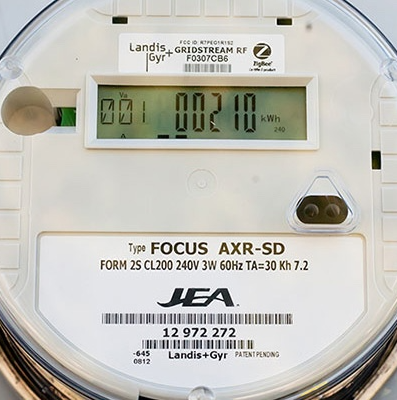
With net metering, your solar system already does this:
- Solar powers your home during the day
- Excess solar energy goes to the grid
- You get credited for it
- You use that credit later when solar production drops
Functionally, the grid becomes your battery. And it has three major advantages over your physical battery:
- Unlimited capacity
- No wear from use
- No meaningful efficiency penalty to you under net metering
Your home battery is different:
- Limited capacity
- Permanent wear with every cycle
- Energy losses in the charge/discharge conversion process
So in a net-metered home, forcing your battery to work every day is usually redundant.
Every battery cycle causes permanent wear
Lithium batteries have a finite lifespan measured in cycles. Every discharge and recharge causes a little permanent aging. That’s the natural chemistry consequence of cycling a battery.
| Usage Pattern | Typical Result |
|---|---|
| Backup-priority (minimal cycling) | Longest lifespan and best long-term capacity retention |
| Moderate daily cycling | Faster aging, earlier loss of capacity |
| Heavy daily cycling | Fastest aging, most noticeable capacity decline over time |
Think of it like tires. You can own a truck and still not want to do burnouts every day. Same concept. You are not “getting value.” You are spending it.
Manufacturer reality: none of them prohibit keeping the battery “full”
This is where people get themselves tied in knots. They hear “don’t keep lithium at 100%” and then treat it like a sacred law. There are many myths floating around the Internet.
Here is the practical reality:
Major home battery manufacturers provide settings that explicitly support backup-priority behavior. Different brands call it different things, but it is the same concept: keep the battery reserved for outages.
| Manufacturer | Backup-priority equivalent setting |
|---|---|
| Enphase | Full Backup profile |
| Tesla Powerwall | Self-Powered mode with Backup Reserve set to 100% |
| EG4 (and most hybrid inverter systems) | High reserve / discharge limit set near 100% |
| Sol-Max (formerly Midnite) (and similar systems) | High reserve / discharge limit set near 100% |
| FranklinWH | Backup reserve set to 100% |
| Sol-Ark and similar | Battery reserve set high (backup priority) |
If keeping the battery reserved for backup were harmful or prohibited, these settings would not exist. They exist because backup-priority operation is normal.
Tesla’s “Recommended Backup Reserve” message is not a battery health warning
Tesla’s Powerwall app will often show a “Recommended” backup reserve like 20%, 50%, or 80%. It may also display a message warning you about a “High Backup Reserve” and suggest lowering it to increase “sustainability” and reduce reliance on the grid.
Let’s translate that into plain English:
- Tesla is encouraging more daily battery usage
- That recommendation is about reducing grid consumption
- It is not a documented prohibition against high reserve
- It is not a warranty threat
- It is not a statement that 100% reserve will harm the battery
Also, Tesla literally provides an option like One-Time Max Backup to temporarily charge to 100% for increased protection. That alone should tell you what Tesla thinks about “100%”: it is allowed and sometimes encouraged for reliability.
In markets where net metering is weak or export credits are poor, lowering reserve can make sense because the battery is being used to avoid buying expensive electricity later. In Florida with full net metering, that logic often falls apart.
Why “keeping it full” makes sense for backup
This part is brutally simple:
- If your battery is at 100%, you have maximum outage protection.
- If your battery is at 50%, you have half the outage protection.
- If your battery is at 20%, you have very little outage protection.
So if the power goes out while your battery is sitting at a low state of charge because it was “doing daily usage,” you lose the whole point of owning it in the first place.
That is why backup-priority settings exist.
“But I saw it drift down a few percent” (normal)
People will sometimes notice the battery sitting near full and drifting down a couple percent. That is normal. Lithium systems manage themselves. They balance cells. They calibrate state-of-charge readings. They do housekeeping. A small drift does not mean “it’s cycling” in a meaningful way, and it does not mean something is wrong.
Daily cycling can cost you money (yes, even if it feels productive)
Even if your utility bill does not change, your battery is still paying a price every time it cycles: it is aging.
Battery aging is not free. Capacity loss is not free. Earlier replacement is definitely not free.
So when net metering already makes the grid your “storage,” daily cycling often becomes a weird hobby that wears out expensive equipment for no financial reason.
When cycling does make sense
I am not saying “never cycle.” I am saying, “Don’t cycle without a reason.” Here are reasons that actually make sense:
- No net metering or poor export credits (not an issue in our service area)
- Time-of-use rates where electricity is much more expensive at certain hours (not applicable to regular FPL and LCEC residential customers)
- Export restrictions (utility limits how much you can send back, not applicable here)
- Off-grid systems (cycling is required because there is no grid – no choice!)
If those conditions apply, optimizing daily usage can be smart. If they do not, it is often just unnecessary wear.
Recommended strategy for most net-metered homes in Florida

If your goals are:
- Maximum outage protection
- Maximum lifespan
- Maximum long-term value
Then backup-priority operation is usually the right choice.
You are not “wasting” the battery. You are keeping it ready for the exact moment it matters.
If you are truly concerned about battery health when fully charged, I recommend 80% as the minimum backup reserve. This should provide some peace of mind while maintaining a healthy backup capacity at all times in case of an outage.
Related reading
If you have an Enphase system and want Enphase-specific details, here is our Enphase-only article:
Battery Mode: What Is the Right Setting for Enphase Systems?
The bottom line
Modern battery systems across all major brands support backup-priority operation. None of them document a prohibition against keeping a high reserve. None of them say you “must” cycle daily. And in a full net-metered environment, forcing daily cycling is often more about feelings than facts.
Your battery is there for outages. Keep it ready.


