

Why A Florida Home Uses More Electricity Than A Nevada Home
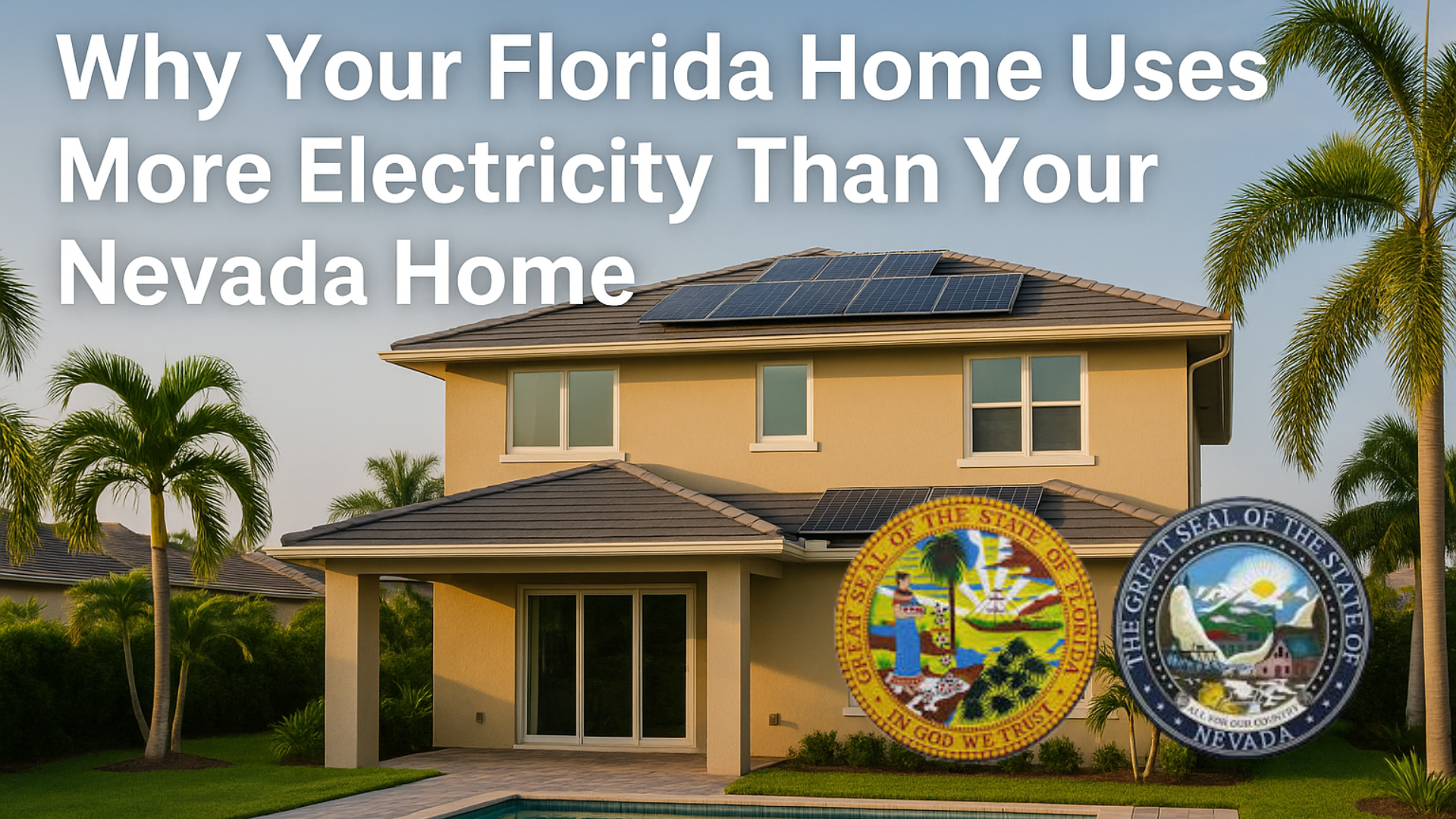 Moving from Nevada to Florida and wondering about your electric bill? Even if your home is the same size—with similar appliances, a pool, and the same square footage—your electricity usage (kWh) is about to climb. Here’s why Florida homes burn through a lot more energy than their desert-dwelling cousins.
New residents to Florida are often shocked at how much more they pay for electricity. Florida residents are famous for complaining about the high summer bills, but the total annual electricity cost is also a tough pill to swallow.
☀️ Dry Heat vs. Wet Blanket
We can also call this a sauna versus a steam bath. In Nevada, the heat is dry, which means your air conditioner can cool the house quickly and cycle off. In Florida, the humidity forces your A/C to work overtime—not just to cool the air, but to remove moisture. That alone can double your cooling load.
Cooling in humid environments like Florida is objectively harder. It has everything to do with thermodynamics, latent heat, and HVAC design. On a hot and humid day in Florida, your air conditioner can easily use 1/3 or more of the required energy just to dehumidify the home before any cooling takes place! In Nevada, A/C mostly cools the air. In Florida, it also has to dry it, constantly.
️Air Conditioning Season: 12 Months
In Southern Florida, your HVAC system doesn’t get a seasonal break. It’s cooling basically year-round. Compare that to Nevada, where HVAC usage drops off in the fall and spring. A/C runtime in Florida is significantly longer, which directly translates to more kWh consumed. It is not uncommon to have the air conditioning running during the winter holidays. The record high on Christmas Day in Southwest Florida was 88 degrees!
With air conditioning consuming 40-60% of the electricity for a typical home in Southwest Florida, cooling costs are the primary driver of electricity bills.
Moisture Changes Everything
Humidity makes everything work harder: refrigerators, fans, and even your water heater. Florida homes often use dehumidifiers, ceiling fans, and additional ventilation just to stay comfortable—all adding to your electrical usage.
Construction Differences
Homes in Nevada tend to have more insulation, better thermal mass (like stucco exteriors and tile roofs), and efficient zoning. In contrast, Florida homes prioritize hurricane survivability over energy efficiency. That often means more air leaks, less insulation, and single-zone HVAC, which aren’t ideal in a 90% humidity environment. Some homes in Florida are constructed for high efficiency, but the mass produced homes from national builders will leave you wondering why your electricity usage is so high.
Pool Dilution
The summer deluges of rain are constantly diluting pool chemicals, and the heat promotes algae growth. This requires longer pool pump runtimes and more pool water turnover for proper sanitation. That extra pool pumping cost adds to Florida electricity bills.
⚡ Same House, Double the Usage
If you have a 2,000 sq ft home with a pool and all-electric appliances, here’s a rough comparison:
| Location | Average Monthly kWh | Notes |
|---|---|---|
| Nevada | 800–1,200 kWh | Dry heat, seasonal A/C |
| Florida | 1,500–2,500 kWh | High humidity, year-round cooling |
What It Means for Solar
The upside? Florida’s heavy usage and higher electricity rates makes solar power a smarter investment. We also have full netmetering here, something Nevada has recently undone. With higher baseline consumption, solar offsets more of your bill and delivers faster payback.
Bottom line: Your Florida home isn’t broken. It’s just fighting harder to stay cool. And that fight costs kilowatt-hours. While Nevada might feel like a sauna, Florida’s summer steam shower is much more challenging in terms of energy use.
Got questions about solar performance in Florida’s humidity? We design systems that match real-world conditions, not just a sunny sales pitch.


