The Safety Device That May Be Starting Fires
Rapid shutdown is one of those ideas that sounds bulletproof in a conference room. Firefighters need to de-energize solar panels on a burning roof. Makes sense. So the National Electrical Code introduced NEC 690.12 in 2014, and by 2017, module-level rapid shutdown became the requirement for residential rooftop solar. On paper, it is elegant. In practice, after nearly a decade of field experience, I think it is time to ask an uncomfortable question: Is rapid shutdown actually making solar installations safer, or has it become a well-intentioned experiment that is making things worse?
I have been designing and installing solar systems for over a quarter of a century. I have watched the rapid shutdown requirement evolve through four NEC code cycles. And the more I see in the field, the less confident I am that we got this one right.
I am not alone. At the 2026 NABCEP Continuing Education Conference in Milwaukee, rapid shutdown was one of the hot topics in the hallways and breakout sessions. Not because people love it. Because experienced installers, designers, and engineers are increasingly questioning whether these devices are preventing fires or starting them. The sentiment ranged from skeptical to outright revolt. These are not fringe voices. These are the most credentialed professionals in the solar industry, and a growing number of them think rapid shutdown has become a liability.
And now there is data to back them up.
What Rapid Shutdown Is Supposed to Do
The premise is simple. When a fire occurs at a building with rooftop solar, firefighters may need to cut into the roof for ventilation or access. Traditional string inverter systems run high-voltage DC wiring across the roof, sometimes 600 volts or more. Even when the inverter is turned off, those conductors stay energized as long as the sun is shining. That is a legitimate hazard.
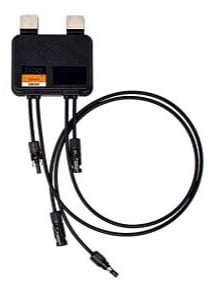
Rapid shutdown requires that all conductors within one foot of the array boundary drop to 80 volts or less within 30 seconds of initiation. The three primary ways to achieve this on residential rooftops are DC power optimizers paired with string inverters, microinverters, or rapid shutdown electronic devices paired with one or more solar panels. These are know as module level power electronics (MLPE). There is also UL 3741, which allows a PV Hazard Control System approach, but for residential rooftops, that path isn’t as well developed yet, and requires system components tested together.
So for most homes, rapid shutdown compliance means adding module-level power electronics to every single panel on the roof. And that is where the trouble starts.
The HelioVolta Report: 21 Fires and Counting
In March 2026, independent field services firm HelioVolta published a report that should be required reading for every solar professional in the country. The report, titled “Unintended Consequences: Rapid Shutdown Devices and Safety in Commercial Rooftop Solar Systems,” analyzed performance data from over 500 commercial solar systems going back to 2021.
The findings are damning. HelioVolta found that commercial rooftop systems using rapid shutdown devices are 66% more likely to experience critical safety issues compared to systems without them. Across those 500-plus systems, they documented 74 issues and thermal events. And here is the number that should stop every solar designer in their tracks: RSDs caused 21 rooftop fires since 2021.
Twenty-one fires. Not “potential hazards.” Not “elevated temperatures.” Fires. On rooftops. Caused by the very devices that are supposed to make rooftops safer.
HelioVolta’s CTO put it bluntly: faulty RSDs are operating on buildings across the country, unintentionally putting people at risk. And as these devices age, worst-case scenario failures become more likely. An assistant battalion chief from Cal Fire was equally direct: failure-prone solar equipment puts firefighters at risk, and it is frankly unacceptable.
That last point deserves emphasis. A fire service leader is saying on the record that the equipment mandated to protect firefighters is actually putting them at risk. When the fire service itself is questioning the safety benefit of rapid shutdown, the code-making process needs to listen.
More Electronics, More Failure Points
The HelioVolta data confirms what many of us in the field have known for years. Every electronic device you bolt to a rooftop is a potential failure point. It bakes in the sun. It soaks in the rain. It expands and contracts through thousands of thermal cycles. It corrodes. And if it fails the wrong way, it can arc, overheat, melt, or catch fire.
PV Evolution Labs (PVEL) flagged this issue as far back as 2021, noting that the very devices designed to de-energize solar systems in a fire can themselves be the source of smoke and fire. HelioVolta’s earlier connector study found that 83% of commercial and utility-scale projects had at least one connector-related issue. Their fire root cause analyses have repeatedly pointed to MLPE as the origin of thermal events on rooftops.
At NABCEP, the hallway conversations told the same story. Installer after installer shared stories of RSD failures they had seen firsthand. Melted housings. Scorched roof decking. Service calls for devices that failed within two years of installation. Nobody is publishing these stories in most cases — insurance settlements get signed, NDAs get executed, and nobody talks. But the people doing the work know what is happening on the rooftops.
Think about the math here. The code requires us to add hundreds of electronics and connection points to a rooftop to prevent fires, and those same electronics and connections are causing fires. That is not a safety improvement. That is a tradeoff, and the HelioVolta data suggests it is a losing one.
Rapid Shutdown Devices Interfere With Arc Fault Detection
Here is a detail that should bother every solar designer. Rapid shutdown devices that use Power Line Communication (PLC) inject electrical noise onto the DC line to communicate with the inverter. That same noise can interfere with the inverter’s ability to detect arc faults. Arc Fault Circuit Interrupter (AFCI) algorithms monitor DC current and voltage for the specific signatures of an electrical arc. When the PLC signal from rapid shutdown electronics muddies those signatures, the inverter may not detect a real arc.
So we have a safety device that can prevent another safety device from working. That is not a minor issue. DC arc faults are the primary cause of fires in solar PV systems. If your rapid shutdown hardware makes arc detection less reliable, you have not improved safety. You have traded one risk for another and possibly come out behind.
Microinverters Already Solve the Problem
Here is what drives me crazy about this whole debate. Microinverters already eliminate the hazard that rapid shutdown was created to address. There is no high-voltage DC on the roof. Period.
A microinverter converts DC to AC right at the panel. The DC voltage at each module is low — around 40 to 60 volts, depending on the panel. There are no long runs of high-voltage DC conductors across the roof. The trunk cable carrying power down to the electrical panel is AC. And AC wiring faults trip breakers, de-energizing those circuits on and inside buildings automatically.
If an MC4 connector arcs on a microinverter system, the voltage is so low that the arc cannot sustain itself. A retired firefighter who now runs a global solar fire safety education program put it plainly: at 70 VDC, there is not enough juice to make it burn. The microinverter shuts down immediately if there is any kind of arc.
Microinverter systems inherently comply with the intent of rapid shutdown because cutting AC power at the breaker or disconnect de-energizes the entire system. The panels still produce DC voltage at their terminals, but that voltage never leaves the panel-to-microinverter connection. There are no 600-volt DC strings snaking across the roof. The NEC acknowledges this — microinverters satisfy rapid shutdown requirements. The question is whether we should be pushing the entire residential market toward microinverters and away from optimizer-plus-RSD architectures that introduce more risk than they mitigate.
The primary downside, of course, is cost. Microinverters are substantially more expensive than other RSD systems, but they do offer other benefits. A secondary downside is lower efficiency when it comes to battery charging for backup systems and off-grid systems. But that is largely mitigated by the low cost of solar panels themselves, particularly when available roof space is not an issue.
Do Firefighters Actually Use Rapid Shutdown?
The entire justification for rapid shutdown is firefighter safety. So here is a question worth asking: are firefighters actually using it?
The answer is complicated. Most fire departments have some level of solar awareness training, but the depth varies wildly. Many firefighters have never encountered a solar-equipped structure fire. Among those who have, the standard operating procedure is still to treat all electrical equipment as energized, period. Hot sticks, the tools firefighters use to check for voltage, only detect AC, not DC. So even after initiating rapid shutdown, a firefighter has no field-ready way to confirm the DC system is actually de-energized.
There are also many different types of rapid shutdown systems in the field, from different manufacturers, using different initiation methods. A firefighter arriving at a burning building has to figure out which system is present, how to initiate it, and whether it actually worked. In the chaos of an active fire, that is a tall order.
And here is the part that should concern everyone: a firefighter who initiates rapid shutdown and assumes the roof is safe may be in more danger than one who simply treats everything as energized. An IEA-PVPS report specifically flagged the risk of giving firefighters a false sense of security through rapid shutdown markings. The report noted that even after shutdown, sunlit modules and their conductors remain energized within the array boundary.
Installation Quality, Inspection, and Bypass
Rapid shutdown is only as good as its installation. And in the real world, installation quality varies enormously.
RSD devices can be bypassed, intentionally by installers cutting corners, or unintentionally through improper wiring. Connectors can be cross-mated, crimped poorly, or left exposed to moisture. With over 200 connector brands on the market and constant supply chain disruptions, installers sometimes have to work with whatever components arrive on the truck.
Once installed, these systems are rarely inspected or tested. Most jurisdictions do an initial inspection at install and never look at the system again. There is no requirement for periodic testing of rapid shutdown functionality. A homeowner has no way to know whether the RSD devices on their roof still work five years, ten years, or fifteen years after installation. They are trusting electronics in one of the harshest environments imaginable, under solar panels on a Florida roof, to perform perfectly for decades.
The HelioVolta report underscores this point. Their data shows that failures increase as devices age, making the problem worse over time, not better. And the report also highlights a painful catch-22 facing the commercial sector: project insurance often requires rapid shutdown compliance, but the devices required for compliance are the ones creating the risk. That is a regulatory knot that needs untangling.
Most rapid shutdown initiates with a two-wire low-voltage circuit that uses a normally closed switch or e-stop button. Think of the failure potential here – if that circuit somehow becomes short circuited by the wires touching each other inside of a conduit, the circuit remains closed, even when the initiation device attempts to open the circuit. This is not a failsafe solution!
The Rest of the World Gets By Without RSD
The United States is an outlier on rapid shutdown. The rest of the world installs solar panels, billions of watts of them, without module-level rapid shutdown requirements, and somehow manages to do it safely.
Europe follows IEC standards, which focus on safe installation practices, proper disconnection means, and clear labeling. They do not mandate the kind of module-level rapid shutdown that the NEC requires. Germany, which has more rooftop solar per capita than almost anywhere on earth, requires DC wiring to be fire-rated within buildings but does not require MLPE on every panel. Australia follows AS/NZS 5033, which requires accessible isolation points but not module-level electronics.
Many of these countries operate residential PV systems at voltages higher than what is common in the U.S. European residential systems routinely use 1,000-volt DC strings. They mitigate the risk through proper installation standards, cable management, and accessible disconnect points rather than adding layers of failure-prone electronics to the rooftop. The US limits residential solar strings to 600 volts.
If rapid shutdown were truly essential for fire safety, you would expect to see an epidemic of firefighter electrocutions in countries without it. You do not. The international track record strongly suggests that proper installation practices, good cable management, and accessible disconnects are sufficient to protect first responders, without the added complexity, cost, and fire risk of module-level rapid shutdown devices.
Where Do We Go From Here?
I am not saying firefighter safety does not matter. It obviously does. I am saying that the current implementation of rapid shutdown may not be achieving its goal and may be creating new hazards in the process. The HelioVolta report gives us something the debate has been missing: actual numbers. Twenty-one fires. A 66% increase in critical safety issues. Data from 500-plus systems over five years. This is not anecdotal anymore.
Here is what I think the industry should consider. Recognize that microinverter-based systems inherently address the rooftop DC hazard without adding dedicated rapid shutdown hardware. Take a hard look at the field failure data. If the devices meant to prevent fires are causing fires, the cost-benefit analysis has flipped. And look at what the rest of the world is doing. Proper installation standards, accessible disconnects, and good cable management have proven effective in countries with massive rooftop solar penetration and no module-level rapid shutdown requirement.
The NEC code-making panels are not oblivious to these concerns. The 2023 cycle already carved out exceptions for carports, trellises, and ground-mounted systems where firefighter interaction is unlikely. That was a step in the right direction. But the residential rooftop requirement, where the vast majority of rapid shutdown hardware ends up, remains unchanged. The frustration at NABCEP was palpable. These are NABCEP-certified professionals, the most rigorously trained and tested people in the solar industry, and many of them feel like the code is forcing them to install hardware they know creates more risk than it eliminates. When the best practitioners in the field are this skeptical, the code-making process owes them a serious response.
As we move into the 2026 NEC cycle and states like Florida consider adoption, it is worth asking whether the rapid shutdown experiment has produced the results we hoped for. From where I sit, after 25 years in this industry and thousands of residential installs in Southwest Florida, the answer is no.
The Bottom Line
Rapid shutdown was born from a legitimate concern about firefighter safety around high-voltage DC solar systems. But the implementation has introduced new risks – more connection points, more failure-prone electronics on rooftops, interference with arc fault detection, and a false sense of security for first responders. The HelioVolta data: 21 fires, a 66% increase in critical safety events, makes the case that these devices are not the net safety improvement the code intended.
Microinverters solve the problem that rapid shutdown was designed to address, without the added hardware, cost, or fire risk. The rest of the world operates solar safely without module-level rapid shutdown. And the devices themselves are rarely inspected, easily bypassed, and increasingly implicated in the very fires they are supposed to prevent.
It is time for a serious, data-driven conversation about whether rapid shutdown is improving safety or just adding cost, complexity, and risk. If you are considering solar for your home in Southwest Florida and want a system designed for real-world reliability and safety, give Florida Solar Design Group a call. We have been doing this for a long time, and we will tell you what actually works.
You are encouraged to download and read the report for yourself here: https://www.heliovolta.com/resources/rapid-shutdown-devices-unintended-consequences